

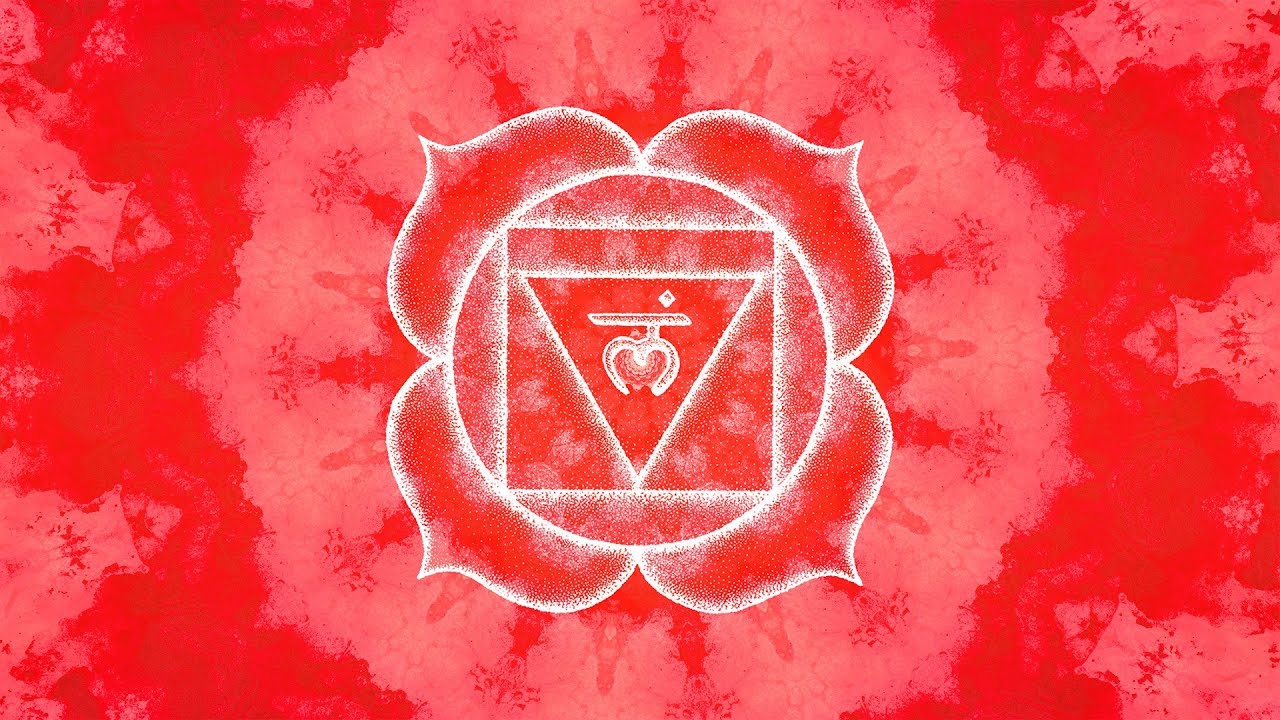
Having meditated on this [mūlādhāra], which shines within the cavity of the root chakra with the brilliance of ten million suns; He becomes the lord of speech, a king among men, suddenly delighting in all knowledge; Health is eternal for him, boundless, and his inner self (antarātmā) is of great bliss; Of pure character, he serves all the gurus of the "gods" with words/poetic compositions
Shat Chakra Nirupanam – Schlokas 13
NOTE: This series on the system of chakras is meant to provide an analysis through the spiritual lens of Islam, which is rooted in the purifying principle of One. It is not an endorsement of polytheistic systems, which the Yogic system denies anyways, nor is it an endorsement, guide, or instruction for any spiritual practices or prescriptions. Where the term ‘god’ or ‘deity’ is used, it is used loosely only to retain common language while understanding these words are metaphors. Where practices are mentioned, it is only informational. While the theme of these posts is to explore the deeper metaphysical architecture of these systems and spiritual technologies thereby enabling us to see the principle of One that pervades all revealed religions as a proof of God, it does not imply the doctrinal teachings of the school of Perennialism (different from “perennialism”).
The Metaphysics of Muladhara
The description of muladhara above from Schlokas 13 is very interesting from an Islamic perspective. Through an Islamic lens, it could be translated in the following way below. Sakala-sura-gurūn (all the gurus of the gods) is here interpreted through a monotheistic lens as the awliyā’, the friends of God, whose service is service to God Himself. Adi Shankara, in his commentaries, repeatedly states that worship of any deva [god] is ultimately worship of Brahman, provided the worshipper knows the unity behind the form, which pertains to the Islamic principle of tawhid [Oneness]. Without tawhid, one necessarily falls into the polytheism inherent to multiplicity. The form itself that pertains to a deva through description is more akin to a description of the Sifat [Divine Attributes] and Asma al-Husna [Divine Names] of God found in Islam, who are said to instantiate in the world most fully in the awliyā [Saints] of God. Adi Shankara say, “Even as rivers flowing into the ocean lose their names and forms, so the sage who knows the One loses all separate deities.” (paraphrase, Brahmasūtra Bhāṣya) Similarly, narendraḥ (king among men) is understood as khalīfat Allāh, the divine vicegerent since the reference to ‘king among men’ is in the context of spiritual realization and cultivation, not material acquisition and status.
Having meditated on this [mūlādhāra], which shines within the cavity of the root chakra with the brilliance of ten million suns; He becomes the lord of speech, a king among men - a khilafat al-illahiya [viceregent of God on Earth] suddenly delighting in all knowledge; Health is eternal for him, boundless, and his inner self is of great bliss; of pure character [khuluqal azim], one gains the ability to worship God through service to the awliyah [those most beloved to God] with beautiful words of poetry and praise
Shat Chakra Nirupanam – Schlokas 13
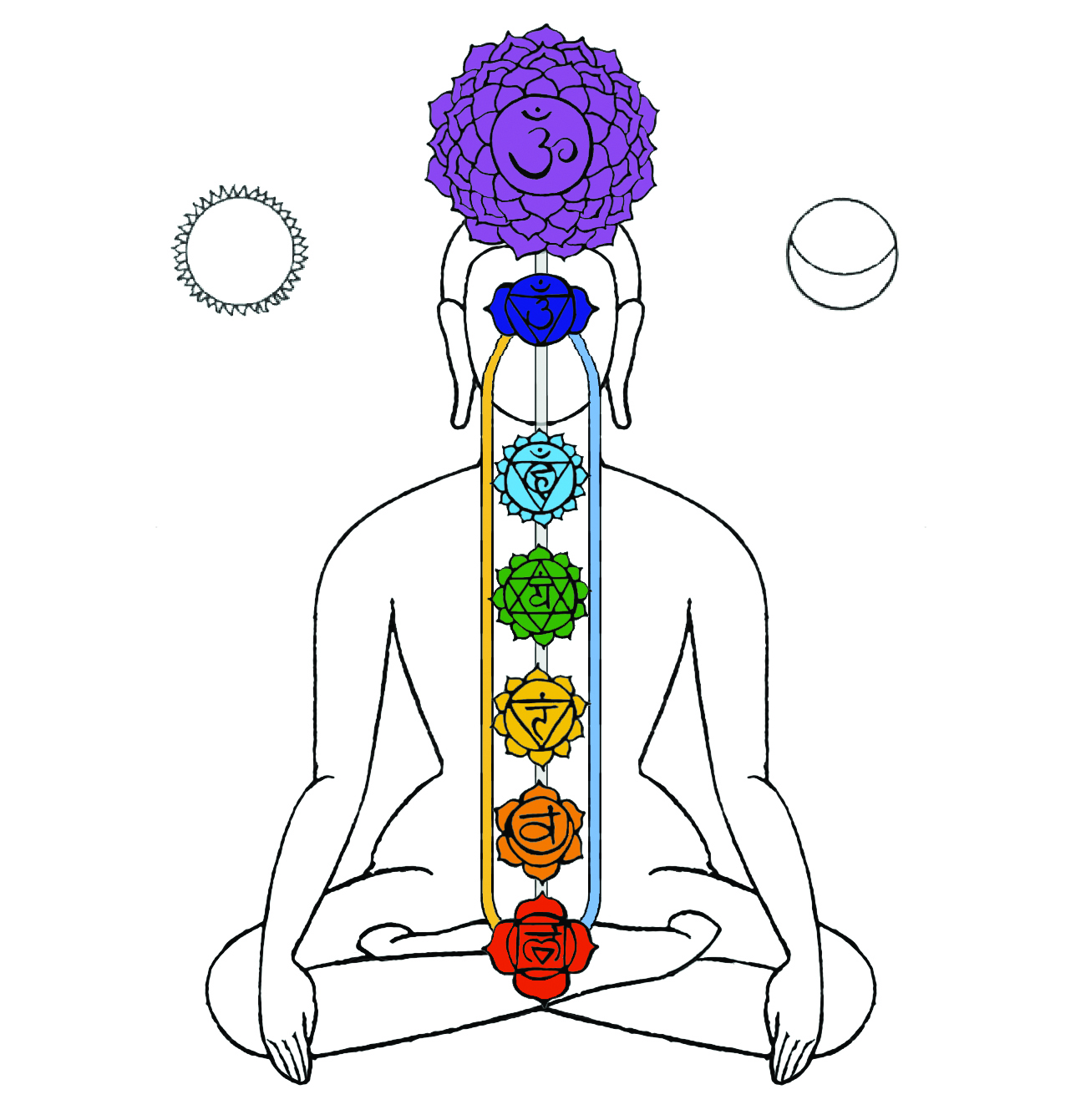
The muladhara chakra is located at the base of the spine. This is the most basic chakra in the body, meaning that it is the foundation of the energy body, the point at which the soul instantiates in the world physically as a body. It is like a seed out of which our physical existence emerges, a belief found in various spiritual traditions.
In the Islamic tradition for instance, the Prophet Muhammad ﷺ said that human beings were created from the coccyx, which looks like a coiled up snake. And after humans die, we will be recreated from it. It is the one part of us that never decays, meaning, our connection to the Earth remains even after death. The Greeks called this bone the “sacred bone”, which is where the word sacral comes from. This understanding of the significance of the sacral bone was known to the ancients, perhaps an artefact of the knowledge of the ancient Prophets long forgotten by time.
The sacral chakra is the storehouse of human potentiality, therefore to cultivate it is to open the door to one’s full potential beyond basic biological imperatives and animal impulses, particularly survival and reproduction. To leave it uncultivated, to corrupt and pollute it, is to not only limit and even reduce one’s potential to become a fully fledged being to that of a mere lower animal who is obsessed with the impulses that characterizes accumulation of wealth and sex, but through these pathways devolve and abase oneself even to the realm of demons. This is why those who are steeped in power and corruption are those also steeped in ever increasing animal-like degeneracy that we often characterize as inhuman and demonic in behavior. Power attracts the corruptible because it offers the ability to fulfill base desires more easily whereas those who are more prudent and aware of their base desires are hesitant to even touch the ‘ring of power’ because they are aware of how overwhelming those base desires can be upon the will and how easily therefore it leads to ever increasing baseness until we cross certain lines that define what it means to be human. One’s corruptibility therefore largely pertains to the state of the muladhara chakra. When it is fully realized, fully under control, fully purified and cultivated, then one becomes like a mountain that cannot be moved or sullied by power. Rather, power becomes the natural tool by which praiseworthy actions are facilitated in the world. For this reason, generosity with one’s wealth and sexual discipline are understood as vitally important for cultivating this chakra.
This chakra is surrounded by eight spears that represent the eight directions. As each chakra is governed by a symbolic deity representing the masculine and feminine energies particular to that center, Mūlādhāra is characterized by the feminine energy of Dākinī and Brahmā Bāla.
Dākinī is described as shining with beauty and carrying the revelation of “Ever-Pure Intelligence.” This use of “shining” to describe the Ever-Pure Intelligence as the quality of Dākinī is striking because it pertains to the experience of an illuminating light as the source of true knowledge found in many different religions, especially in Islam, which describes the gnostic experience of God.
Here we see many interesting correspondences with the Islamic tradition. This description of Dākinī as the personification of the feminine principle corresponds to the feminine principle in Islam as ʿIlm (Knowledge), the Divine Attribute of conscious awareness that receives, knows, and holds the essence of all things. Imam al-Ghazālī mentions īmān (faith) as an illuminating light that God places in the heart, associated with the light of knowledge and revelation. In Islam, faith is not mere opinion and vain hope, but a rational position rooted in knowledge that starts off as intuitive and progresses to direct witnessing.
In the Yogic tradition, the masculine energy presiding in Mūlādhāra is the child form of Brahmā (Brahmā Bāla), characterized by innocent potency, the seed of all manifestation, and the untainted origin of creative will. The Islamic counterpart to this is Qudrah (Power), the Divine Attribute of active command and creative efficacy. Brahmā Bāla is depicted with various symbols (not a literal form of an idol): four-faced yet small in stature, radiant like molten gold, holding a sacred thread, a water pot (kamaṇḍalu), prayer beads (akṣamālā), and the Vedas – all symbolic of the primordial ordering of the cosmos from chaos. His child form signifies that creation is not a product of weary age requiring rest after creation, as depicted in the Bible, but of fresh and undiminished vitality. In the Qur’an, the Divine Command Kun, “Be,” issues forth as an effortless act by God. In one verse, the Qur’an states:
"And it is He who begins creation; then He repeats it, and that is indeed easy for Him."
Qur'an [30:27]
Where Dākinī, as the receptive principle of Knowledge, reveals “Ever-Pure Intelligence”, the child Brahmā, as the active principle of Power, receives it and begins the active process of play, naming, forming, and manifesting. Together, they are the root of dharma: the feminine as pure knowing, the masculine as sacred action in its most nascent, uncorrupted state. From an Islamic perspective, these two Divine Attributes — Knowledge and Power — join together to issue the amr (Creative Command), which is Kun, “Be.” This in turn gives rise to the kawn (First Being), which is none other than al-ʿAql al-Awwal (the First Intellect), also called the Supreme Intelligence or Supreme Spirit.
Around the triangle depicted in Mūlādhāra is the abode of the downward-facing Shiva liṅga around whom is coiled the snakelike Kundalini Shakti three and a half times, reverberating like a distant swarm of bees and who is said to “…attract[s] the entire world and covers the Brahmā-dhāram with her whole mouth.” Here, Shiva and Shakti appear in their most primordial form: within the feminine principle (Shakti) lies the knowledge of the latent potentiality of the masculine principle (Shiva). Symbolically, when her desire is stirred, she seeks to awaken him to reach his full potential by inviting him into her presence. This is an anthropomorphic description of deeper and more substantive metaphysical realities that lie within our fitra [primordial nature]. Such descriptions enable us to comprehend these subtle realities not through crass literalism but through language that speaks to our higher intuitive faculties of knowledge.
Shakti is the ultimate feminine source driving all sub-manifestations, described as extremely subtle, well-versed in all creation, and eternally blissful. In Islamic terms, she corresponds to the traces of Knowledge within the Supreme Spirit, which gives rise to al-Nafs al-Kulliyyah (the Universal Soul) – the metaphysical dimension of all animate beings, characterized by conscious awareness.
Shiva, by contrast, is the dormant masculine principle, described as a swirling whirlpool of energy, revealed by knowledge and meditation, awakened only by Shakti. In Islamic terms, in this form, he corresponds to the traces of Power within the Supreme Spirit, which gives rise to al-ʿAql al-Kullī (the Universal Intellect) – the metaphysical dimension of all inanimate beings, characterized by action and cosmic ordering.
As the Kundalini becomes active through the application of the interaction of knowledge and meditation, in Islamic spiritual practice as “fiqr” (contemplation) and “dhikr” (remembrance), it is experienced as vibrations and reverberations, as if the very particles of the material world are stirring into wakefulness. This reminds us of the poem by Jalāl ad-Dīn Rūmī, who described the atoms of existence vibrating in ecstasy as they extol the name of God. This activation is the cooperation of the Universal Soul (awareness) and the Universal Intellect (action), which together bring about all spiritual and material realities, that is to say, all dimensions of created reality: one centered on activity (masculine), the other on awareness (feminine).
Thus, whether described as Shiva and Shakti or as Power and Knowledge, Universal Intellect and Universal Soul, the truth is rooted in one principle. The Universal Soul and the Universal Intellect are the yin and yang of the spiritual realm, which are the cosmic polar principles of the Divine Feminine and Divine Masculine Principles in eternal cooperation, both contained within the fiṭrah [primordial nature]. The relationship between these two polar energies as creative principles is the very heartbeat of cosmology and cosmogony, the origin of the universe and the origin of the human being, which is one, for it describes the foundation of the process of Being and Becoming.
To meditate on Mūlādhāra is to touch the root of the amr or Creative Command: the place where the Divine whispers Kun or “Be”, and the universe, in blissful recognition, replies, “I am.” To this, the Qur’an states:
"Then He directed Himself to the heaven (masculine principle) while it was smoke and said to it and to the earth (feminine principle), 'Come [into being], willingly or by compulsion.' They said, 'We have come willingly.'"
Qur'an [41:11]
The spiritual project is fundamentally about becoming a fully-fledged being, of realizing the full potential of the human being to become the shadow of God on Earth, as designed by God as the blueprint we call the fitra. Ultimately, the root chakra speaks to this essential teleology and metaphysical principle, which is why so much emphasis is placed on it as well as on the commands and prohibitions associated with the body to which sharīʿah (sacred law) applies, for it is conjoined with success or failure, to come willingly or by compulsion.
Without a strong foundation, one cannot flourish, one cannot know health, wellbeing, and a sense of completeness and being rooted. What that means for the other chakras is that their full potential cannot be realized until this root chakra is first made stable and sound. For that reason, in the Yogic system, Mūlādhāra is focused on more than anything else. When the feminine principle as spiritual force is able to manifest more powerfully through embodied being because the masculine principle has a concrete container – formed by spiritual, psychological, and physical boundaries – then the embodied self also becomes more powerful and open to bliss.
The Element of Muladhara

With Mūlādhāra being likened to a seed, it is understood as our connection to the Earth element, represented by the yellow square. It is said that man shall reemerge from it after being buried into the Earth after some time. Because of that, its element is Earth.
Mūlādhāra keeps us grounded and embodied in the physical dimension through the physical body, and thus, keeps us physically strong and secure. Because it is the root of physical Being, it is the basis of the ego and the animal self. It holds our instinctual survival urges for food, sleep, sex, and fighting (self-preservation). Because of the impermanent nature of the ego that defines the animal self, of physical Being, it is the realm of our avoidances and fears as well and feels as if this is the default setting.
Signs of a Blocked Muladhara
When Mūlādhāra is blocked or out of balance, we become dominated by the energy of the ego, which is rooted in the animal’s fundamental survival instincts and thus characterized by a sort of operational anxiety that causes us to always be on the look out of threats, whether real or abstract. This in turn causes us to always preside outside the miracle of witnessing the present moment, always thinking of what we need to acquire or what we need to avoid.
In the Islamic thradition, it is said that the shaytan works by instigating the lower animal self [nafs al-ammara] to generate the energy of the fear of loss from which our actions are derived through threats of poverty. The shaytan cannot be overpowered, but it also does not have direct access to your heart. Its threats of poverty can be nullified through resignation with one’s death. The fear that arises from the threats of poverty exist for the purpose of avoiding death at all costs, and so if one’s heart becomes resigned with death, then the energy of that fear dissipates. This cognition is connected to the cultivation of the Mūlādhāra chakra and causing it to become a stable foundation.
The lower animal self, the ego, cannot be overpowered either. It is held that the nafs is even stronger than the shaytan. It is God’s strongest creation, like a powerful and wild animal it represents man’s ambition that arises from its eternal nature and its eternal longing for God; but from a Yogic perspective, when the Mūlādhāra remains uncultivated, the animal remains untamed and wild, and thus our ambition takes on the form of self-deified Lordship like an all consuming fire; its drive to climb the heights of the heavens in order to arrive at the loftiest of heights is distorted under the illusions of the ephemeral world. While it cannot be overpowered therefore, because it lacks an intellect, it can be outsmarted and tamed.
In this state, we become dominated by the animal self and its lower desires or impulses, all of which revolve around insecurity and its instincts to accumulate resources, fight, flee, and procreate. However, these are reformulated into ambition and inverted into lofty goals and objectives, which then define the myriad social dominance hierarchies that humans create and compete within. Greed, lust, wrath and power, all of these become translated into social values that humans the define their worth and value based on. However, these impulses exist all on the same horizontal plane as lower animals; the impulse and desire to accumulate mass amounts of wealth has no real difference from, say, a squirrel accumulating many acorns. These are impulses that are intertwined with our fundamental reward pathways and the dynamic between stress and pleasure, that cocktail of hormones and neurotransmitters that can become very addicting very easily to the point that it narrows the scope of our existence. When imbalanced, we very easily enter into these addictive compulsive cycles of highs and lows, pain and pleasure.

Signs of an Open Muladhara
When Mūlādhāra is sufficiently open, we feel strong and confident in our own Being. From the perspective of the ancient Greeks, it could be said that in this state the four virtues of wisdom, justice, courage, and temperance arises in an individual. Qualities such as courage and determination come to the forefront, from the will to survive and to overcome all obstacles when in difficulty to the will to improve the conditions of others when witnessing suffering. This confidence comes not from the ego and its reliance on its own accumulation of power but from the higher self that has direct awareness of God, and thus, on the reliance on God’s Power and Knowledge. From a social psychology perspective, it speaks to the difference between a person who has positional authority but no dispositional authority compared to a person who has dispositional authority but who may lack any real positional authority within any meaningfully significant social status hiearchy, and yet they command more respect than those with more status.
The need to compensate for our lack of internal strength through climbing status hierarchies, acquiring resources, and so on, diminishes. When the energy of fear is mastered, and the animal spirit is disciplined, because Mūlādhāra holds our most powerful latent spiritual potential (Kuṇḍalinī Shakti), then the true spiritual power that emanates from the root of Being may invigorate us. Through meditation, both as a practice as well as a lifestyle that itself has become meditation, we begin to breathe life into the sleeping power that sits in our root.
The Color of Muladhara
The color that is commonly used to activate and cultivate the root energy center is red. The color red is a warm and positive color associated with our most physical needs and our will to survive. It exudes a strong and powerful masculine energy, but it is only made strong and powerful because of the feminine basis of it. Red is energizing. It excites the emotions and motivates us to take action. After all, in the Yogic tradition, it is the feminine energy of Shakti that awakens the dormant and latent masculine potential of Shiva, exciting it and moving the masculine into action. It signifies a pioneering spirit and leadership qualities, promoting ambition and determination.
The color red signifies a strong will and can give confidence to those who are shy or lacking in will power. Being the color of physical movement, the color red awakens our physical life force.