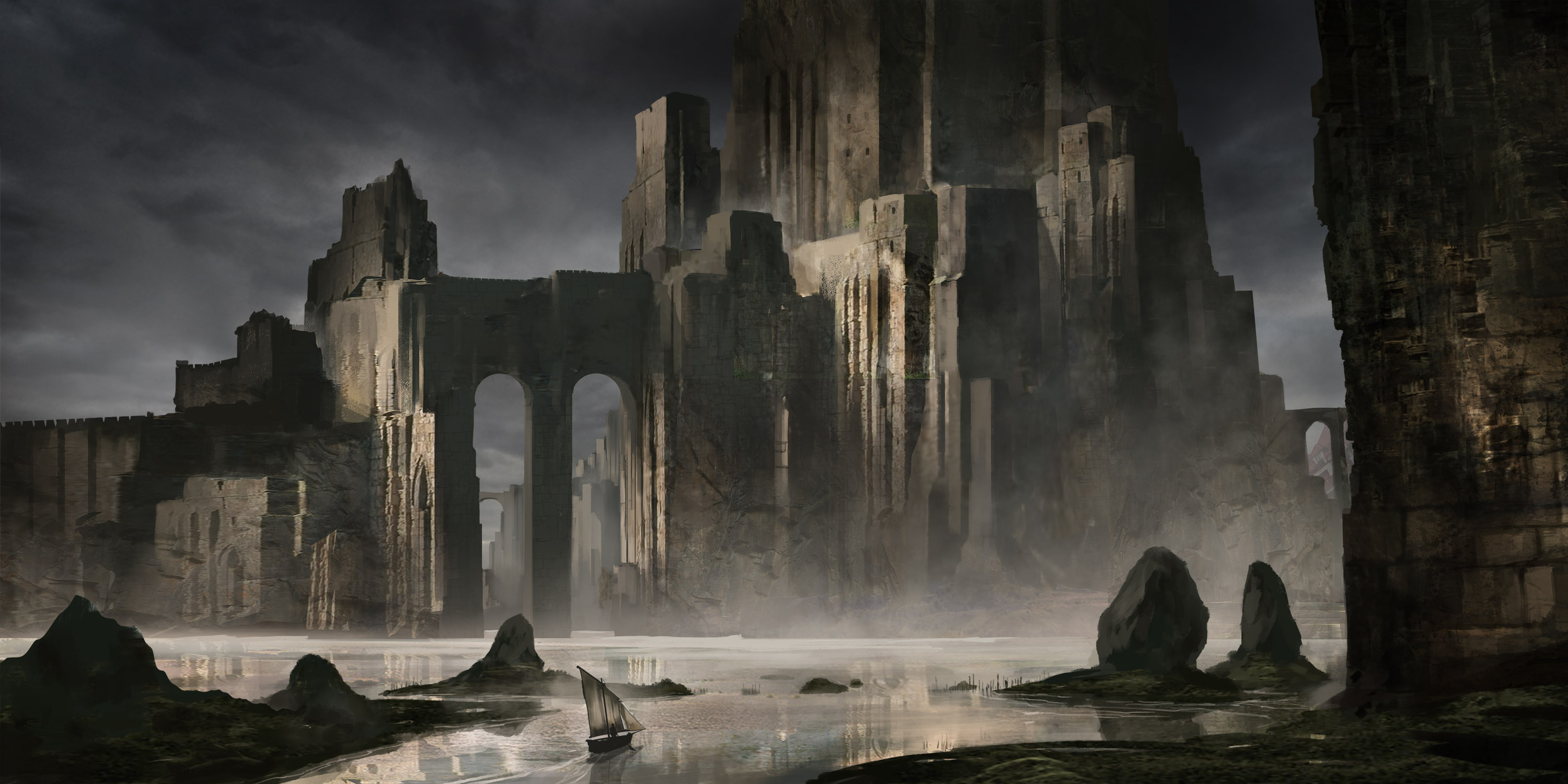
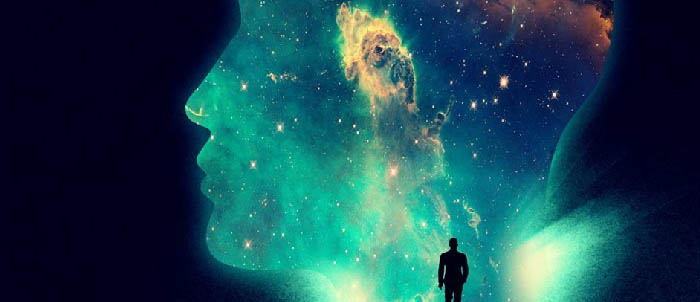
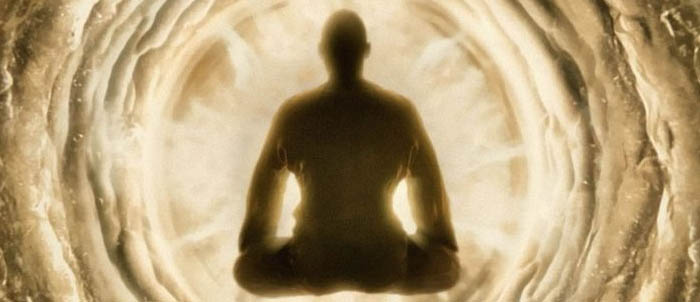
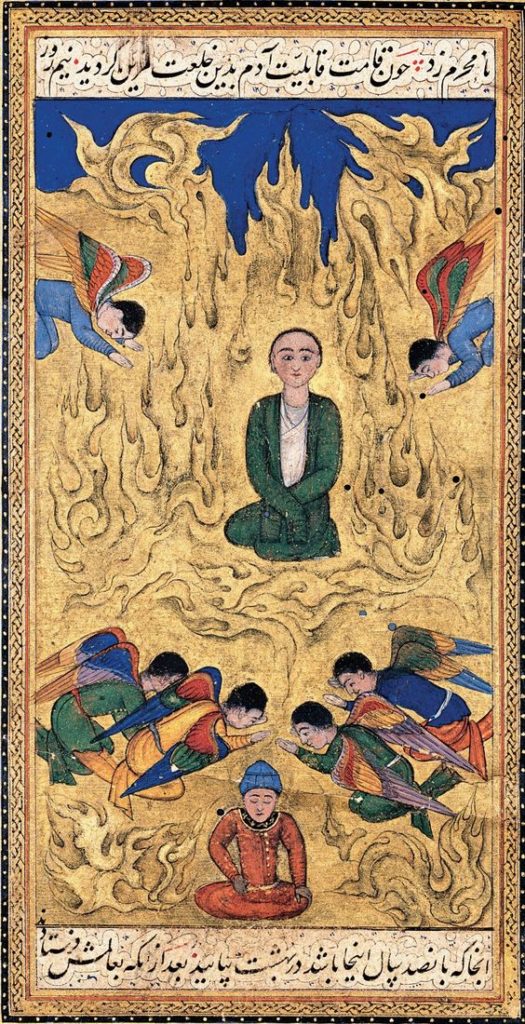
If the baby in the darkness of its mothers womb were told: “Outside there is a world of light, with high mountains, great seas, undulating plains, beautiful gardens in blossom, brooks, a sky full of stars and a blazing sun, and you facing all these marvels stay enclosed in the darkness, the unborn child knowing nothing about these marvels, would not believe any of it. Like us, when we are facing death. That is why we are afraid.”
“But there can’t be light in death because it is the end of everything.”
The above dialog is from the movie Bab Aziz, which is the story of the final days of a man who follows the mystical path of Islam, popularly known as Sufism here in the west. Life is a pilgrimage towards death, and he has just arrived at its gate. To pass through this gate, he must pass away from this earthly realm. The world, he says, is like the dark womb of the mother and we the unborn children. As we cultivate ourselves and mature, which is what one of the purposes of the womb is for the unborn child, we eventually die from the world of the mother and enter a realm that is wholly transcendent to it, which is the outside world. Stepping through the gate is his wedding night with Eternity, and so he says to Hassan, do not be sad for me but be happy. Marriage symbolizes union with the Beloved, and we spend our lives becoming worthy of the Beloved’s embrace.
But as we travel this arduous path, we realize that this sense of becoming worthy has nothing to do with our own merits, but everything to do with God. And so this path is really about transformation into the realization of the permeation of Divine Love in one’s Being. It is the path of becoming humble, of learning how to truly prostrate to God alone. As Muhammad Iqbal wrote, “This one sincere prostration that you deem too exacting liberates you from a thousand prostrations.” Acknowledging this is in fact the path to elevation and to freedom. It is the basis of true humility, and it is why on the spiritual path it is said that only those who become humble can succeed. Ibn Arabi writes in his mystical poem of Allah’s message, “You cannot treat me fairly, for if you approach me, it is because I have approached you”, echoing the words of Rumi, that your longing to reach God is in fact God’s longing to reach you. What this dynamic describes is the prostration of the Heart, of turning inwardly, of surrendering your ego and its presumptions of power. This is what is meant by submission as the essential character of Islam. It is not submission in terms of material conquest, but of humility to the Beloved. Compared to the Divine Reality, the material world is taught within Islamic doctrine as unworthy of attachment and longing.
On The Breath of Life and Death
“There is nothing except God”, a truly mysterious statement. It implies that the origin of all ontological dimensions of existence is what we call God; the Yogic tradition references Brahman, the Buddhists reference the True Mind that transcends all categories and concepts and thus abides in Nirvana, the Abrahamic traditions reference Allah. These words represent the Oneness of reality, non-duality, that is wholly transcendent to all categories of Being and conceptualization, and thus, represents the origin from which emanates all categories of Being and concepts. God as the transcendent reality is the ground of immanent Being, and thus there is an inherent intimacy between our existential nature as percipient beings and the transcendent Divine Reality.
There is no life except the Ever-Living, and it is from the Ever-Living that the life force emanates forth permeating the body. And when the life force is withdrawn from the body there is left the lifeless corpse. The true nature of the physical form becomes revealed, no longer embellished by the life within, and the life within no longer obscured by the physical body. The life force that permeates percipient Beings is a quality of the Divine Breath, and our breath in this world is a quality of life; our breath is thus directly linked to the Divine Breath, which is why the saying of the mystical Sufi Naqshbandi order, that “The secret is in the breath” [1], is so pertinent to our meditative practice. As long as there is the Ever-Living, there is always the Divine Breath and therefore always life, even though it may not be in a form recognizable to the physical eye.
Indeed, the body is like a cage for the soul; like the bird, it takes immediate flight to the open skies once the door has been opened, for that is its nature. Do not be sad for it, for it has become free. As for the body, it was merely a house that served its master, sheltering them, keeping them safe and warm in the storms of the world. And like all houses, their destiny is to join the ruins of the world; the body is really a monument of the one who resided within, a temple in which God was celebrated. It was the celebration within that brought life and light to it, and it is that spirit of celebration that hints at the reality of the one who dwells within.
Man is but a single breath. Life hangs between the exhalation and the inhalation of the Divine Breath. As God breathes out of the Divine Essence, the form of man breathes in until he reaches his zenith. Then as God breathes in, recalling the creative attributes of the Divine Essence, man breathes out until he withers away. As Murabat al-Hajj once said, “What is man but a comet that flashes brilliantly before it is reduced to ash?” Life is that which when withdrawn existence transitions into non-existence. The ground of Being recalls into it all manifested phenomena.
Beauty and Life
Socrates called this world the “mixed world”. The world is defined by paired opposites, mutually relational concepts that define each other, and thus, depend on each other to exist. The life of this world, intertwined with phenomenal manifestations, can only be understood when contrasted with death.
The lifeless corpse says more about life than a thousand philosophers and poets. Its language is the silence of death for only when contrasted with death may life be seen, and only in silence may life be heard. Death is the symbol of impermanence, and so it is only by piercing beyond impermanence with the gaze of one’s spiritual eye may the transcendent life be apprehended. Life is an expression of the Essence of God, and thus effaces even this notion of what we call death. For what is death but the reality of impermanence that defines phenomena? And so, before God may be approached all else must perish. One’s Being must pass through the gate of death into non-Being, beyond all categories and concepts, and only then is True Being realized. These lifeless corpses, despite their apparent magic, are still lifeless. It is the animating force of the Essence that must be venerated.
It is that Essence, the conveyance of the soul, not to the body, that we are really attracted to, that we have connection with. When someone we knew dies, we tend to feel that it is not really them, as if our perception has deceived us. There is the inability to truly recognize them as the person we knew, as if something is missing. We are left in a state of disbelief about who this is. While some would call this denial, it is actually a subtle awareness of a higher perceptive knowledge. That despite the physical arrangement of their body remaining the same and familiar, and therefore conveying to us who they are, there is something immaterial that is absent that makes us perceive that this is not really them. It was never the body, it was the immaterial life that dwelled within them who was really the one we knew and were connected to and had a relationship with. The body is simply a veil, but also a modality by which that life expressed its existence. But as the body perishes, that mysterious life once again enters that realm of mystery, and we here are left bewildered by that mystery.
Do we ever call a corpse beautiful, and fall in love with it? No, that very notion would be met with absurdity and even disgust. It is because that immaterial reality that we call life is no longer permeating the body, and because it was that immaterial reality, that transcendent manifestation of life, that was the source of our experience of them, we no longer recognize that person. The soul is a pathway into the infinite Source of life, and when this conduit for which the body functioned as has been closed, then there is an unfamiliar feeling. A sense of alienation almost.
We see this dynamic in our everyday experience of different people during different periods of life or levels of self-actualization. When that spiritual dimension has a stronger presence in certain people then it would also likewise have an affect on how we feel about them and how beautiful we find them as an experience. It ultimately reflects one’s inward state. Beauty is an expression of life, where life is a manifestation of the Truth of the Divine. The soul burns brightly in those who are truly alive, whereas the Qur’an describes those people with dead hearts as being like corpses. Beauty does not emanate from them, and they are characterized by an ugly harshness.
The Departure And The Return
Every inhalation you take is from the original exhalation of God, the creative force that manifests life, and every exhalation you take is from the original inhalation of God, the destructive force that brings death. We, as manifested beings, as souls, proceed forth and then recede back as the Divine Breath to its Source. Our days in this world may appear numerous but in reality are not more than a single breath. That is the fundamental nature of Being, and therefore, our nature cannot be understood without consciousness of impermanence.
“La Illah ha – there is no god” is the original exhalation of the Divine Breath of God. The concept that the term ‘god’ references requires a nuanced explanation, but fundamentally it refers to that which has inherent reality. And so this Divine Statement is the affirmation that no thing has inherent reality and thus true existence. As a manifestation, however, is a negating force. It is in this affirmation that there is, necessarily, a negation. The nature of reality is Oneness, non-duality, and therefore, any notion of multiplicity or duality is negated in the affirmative statement of Oneness and non-duality. How does God affirm Oneness? The answer has an infinite number of possibilities, but as far as the dimension of human experience is concerned, it is through human experience itself. It is a witnessing that occurs within the Heart of man.
The exhalation of the Divine Breath whereby which Oneness is affirmed manifests created beings. Because created beings are a manifestation of this affirmation, our primordial nature, the Fitra (فطرة), is the confirmation of Oneness through the negation of all else. In order to affirm oneness, first we must negate the perception of duality and multiplicity, and therefore of the perception of the material world itself. This marks the beginning of the opening of the Third Eye, the spiritual eye. The one that has the least fear has the most powerful eyes, they are eyes that can perceive, eyes that can know states, eyes that acquire Knowledge. The Prophet called it Basirah (بصيرة), which means true perception, insight and foresight of transcendental Truth. It leads to the deeper discernment of certain knowledge from that Truth, which has been termed as Firasa (فراسة).
As man exhales, it is really the original inhalation of God taking back man’s spirit, which affirms “il Allah – except God.” As an inhalation by God, there is the withdrawal of the creative elements and animating force that sustained and maintained life, and therefore, we perceive in this occurrence the manifesting force of the destructive attribute of God. It is not so much that we are running out of time as much as it is we are running out of breaths, for the number of breaths for each soul has been allotted and proportioned out.
Our breath, as we exhale the Divine Name, is returning to the Divine Source and finding purification in the illumination of the Divine Presence. And when we are mindful and not heedless of this, through concentration and silence, then through the breath does purification of our Hearts here in this world occur. But, regardless of whether or not we have been purifying our spirit, it is in a state of return to the Source.
Our returning not only confirms but also, through direct witnessing, perfects the affirmation of the initial exhalation, the negation of duality and multiplicity as unreal. As the last breath leaves the body and the animating force of life vanishes, we return to the eternal Source of the Ever-Living where the affirmation of the inhalation is actualized, and therefore realized, in God. While the final exhalation marks the end of life in this world, because it is followed by the inhalation of God, it actually marks the beginning of eternal life in God. It is an infinite upward ascent into the Divine Presence whereby which the purity of the breath manifests sanctified. This paradoxical occurrence, a manifestation of the metaphysical Principle that states “As above so below”, comes to characterize the meditative practices in which the Heart is purified through the bridge of the Divine Breath that connects us to God.
When we are in harmony with our nature then we are necessarily fulfilling our existential purpose because the basis of alignment is witnessing, where our witnessing is the affirmation of the Divine Breath. When the body becomes aligned with the spirit the Divine manifests brightly within us, first like a blazing sun that seems to emanate from above. But as we dwell within this remembrance of the Divine, the Light nurtures the Heart like a caring mother and a protective father. All of experience occurs within our awareness, and so we recognize this empowering state as our true and inherent nature, observing that the Light is actually emanating from within us. At this instance, we learn about what the Buddha called the Natural Mind, which he said is naturally endowed with Enlightenment. This is echoed in the Prophetic statement, that whoever knows their own Soul knows God. At this point, we become consumed in the golden flame of Divine Love, and as we allow ourselves to become overtaken by it, any sense of an ego, an I, a separately identifying self, is burned away along with illusory world which the false self was defined by. We transcend all realms and make our way towards God into the next life.
And so, man’s ultimate purpose, the affirmation of “La Illah ha il Allah – there is no god except God” is fulfilled. All illusory forms are negated. This is the marriage with Eternity that the Sufis, the spiritual masters of Islam and all religious traditions, talked about. They were telling us about the world of Light that is beyond all realms of existence, the knowledge of which is transcribed on our very Hearts. But to attain to that state of Enlightenment, all illusory forms of Being must become effaced totally by the Light of the Divine.
Please consider supporting the emptyingthecup project by subscribing to one of the membership tiers that aligns with how you wish to engage the community and support the project. Thank you.
Supporter
$3/ month
Access to all free content
Limited access to Discourse platform, posts and replies (280 character limit), like, repost and share
Comment on Articles
Helper
$7/ month
Access to all free content
Limited access to Discourse platform, posts and replies (280 character limit), like, repost and share
Comment on Articles
Full access to mobile app (coming soon)
Access to meditation stats and charts
Companion
$10/ month
Access to all free content
Comment on Articles
Full access to mobile app (coming soon)
Access to meditation stats and charts
Write Reflection Entries
Full Access to Reflections Board
Full access to Discourse platform features, 2500 character limit for posts, replies and quotes, Reflections insertion, polls, and more