
With the syllable Om as their sole support, the wise person attains that which is peaceful, un-ageing, deathless, fearless, The Supreme.
Atharva Veda, Prasna Upanishad 5.7
NOTE: This series on the system of chakras is meant to provide an analysis through the spiritual lens of Islam, which is rooted in the purifying principle of One. It is not an endorsement of polytheistic systems, which the Yogic system denies anyways, nor is it an endorsement, guide, or instruction for any spiritual practices or prescriptions. Where the term ‘god’ or ‘deity’ is used, it is used loosely only to retain common language while understanding these words are metaphors. Where practices are mentioned, it is only informational. While the theme of these posts is to explore the deeper metaphysical architecture of these systems and spiritual technologies thereby enabling us to see the principle of One that pervades all revealed religions as a proof of God, it does not imply the doctrinal teachings of the school of Perennialism (different from “perennialism”).
The Metaphysics of Sahasrāra
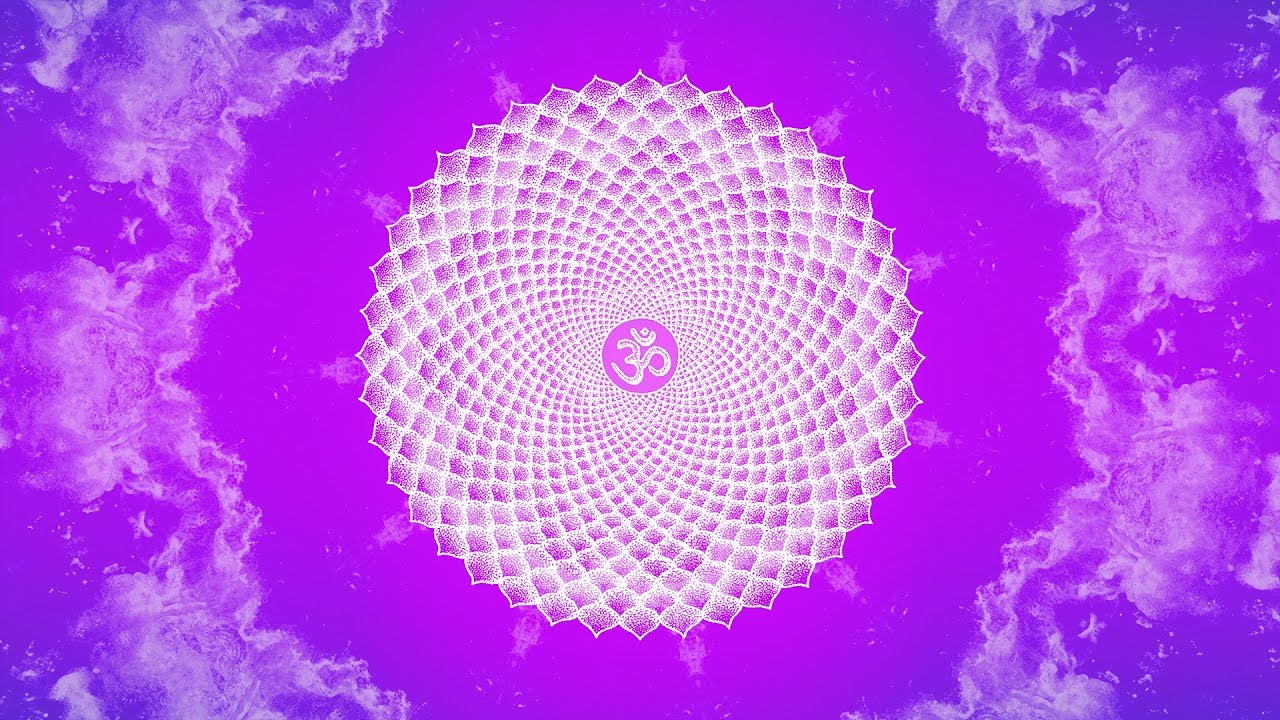
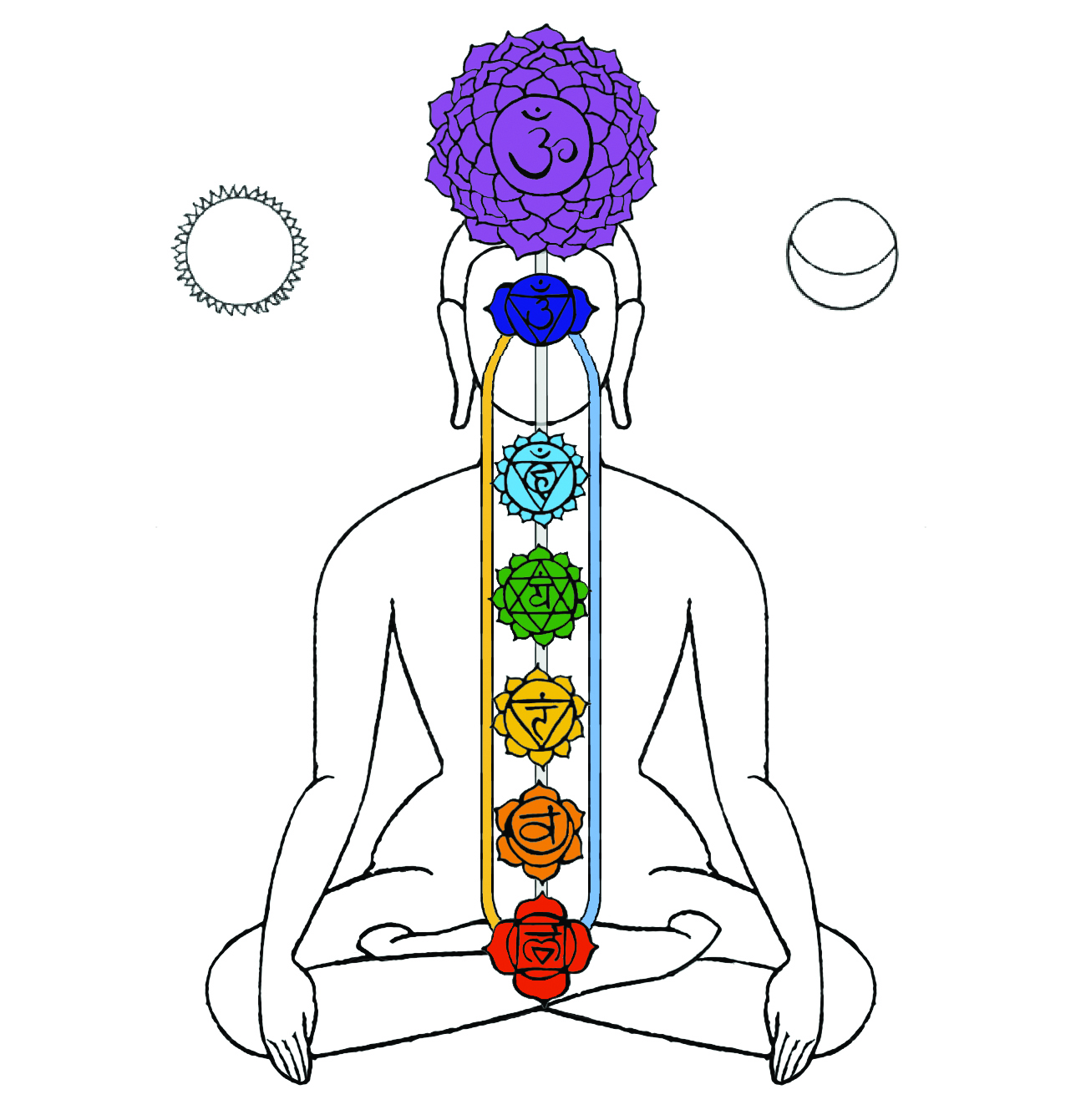
Sahasrāra is located on the crown of the head, for this reason it is called the Crown chakra. It is also known as the Thousand-Petalled Lotus as well as Brahmrandhra, which means door to Brahman. Brahman denotes the highest Universal Principle, the Ultimate Reality, and thus transcends duality. Brahman is the material, efficient, formal, and final cause of all that exists. It is the pervasive, infinite, non-abiding eternal truth and bliss which does not change, yet is the cause of all changes. Brahman as a metaphysical concept refers to the single binding unity behind the diversity in all that exists in the universe. Sahasrāra is thus the door to the Divine Presence itself that is mentioned in various spiritual-religious traditions, the entry point of the Kingdom of God that Jesus ع had taught. When agna is awakened, the light that emanates from beyond this door can be seen, which is why agna and sahasrāra are closely related in terms of qualities and practice.
In relation to all lower levels of reality, the Divine Masculine and the Divine Feminine are Principles, but in relation to the Universal Principle, they are particulars. As personifications of Divine Will, Shiva and Shakti are simply expressions of the Universal Principle by which we as human beings, as manifestations of their cosmic polarity, relate back to the unitary God-Principle. By now it should be understood that Shiva, Shakti, and the other permutations of the masculine and feminine cosmic energies, are not actual deities as often portrayed. They are anthropomorphized expressions and personifications of transcendent Divine Attributes in order to aid humans in understanding them by way of experiential relation, that is, by reflecting on their own qualities that God has adorned them with and which they must uncover in this world. The Divine, in reality, cannot be known by the personal name of God per se during the journey to God, which denotes the personal relationship with God that is beyond the references to the highest Universal Principle. Instead, we come to know God through the expressions of God’s Attributes through Divine Acts in the world, which in Islam we know by the Names of God. These Divine Names are called the Beautiful Names (asmā’ al-husnā), which express the multiplicity of expressions of the Divine Masculine and the Divine Feminine Principles, which like Shiva and Shakti, emerge from and express the unitary Principle of Allāh.
Sahasrāra is located on the crown of the head, for this reason it is called the Crown chakra. It is also known as the Thousand-Petalled Lotus as well as Brahmrandhra, which means door to Brahman. Brahman denotes the highest Universal Principle, the Ultimate Reality, and thus transcends duality. In relation to all lower levels of reality, the Divine Masculine and the Divine Feminine are Principles, but in relation to the Universal Principle, they are particulars. As personifications of Divine Will, Shiva and Shakti are simply expressions of the Universal Principle by which we as human beings, as manifestations of their cosmic polarity, relate back to the unitary God-Principle. By now it should be understood that Shiva, Shakti, and the other permutations of the masculine and feminine cosmic energies, are not actual deities as often portrayed. They are anthropomorphized expressions and personifications of transcendent Divine Attributes in order to aid humans in understanding them by way of experiential relation. Brahman is the material, efficient, formal, and final cause of all that exists. It is the pervasive, infinite, non-abiding eternal truth and bliss which does not change, yet is the cause of all changes. Brahman as a metaphysical concept refers to the single binding unity behind the diversity in all that exists in the universe. Sahasrāra is thus the door to the Divine Presence itself that is mentioned in various spiritual-religious traditions, the entry point of the Kingdom of God that Jesus ع had taught. When agna is awakened, the light that emanates from beyond this door can be seen, which is why agna and sahasrāra are closely related in terms of qualities and practice.
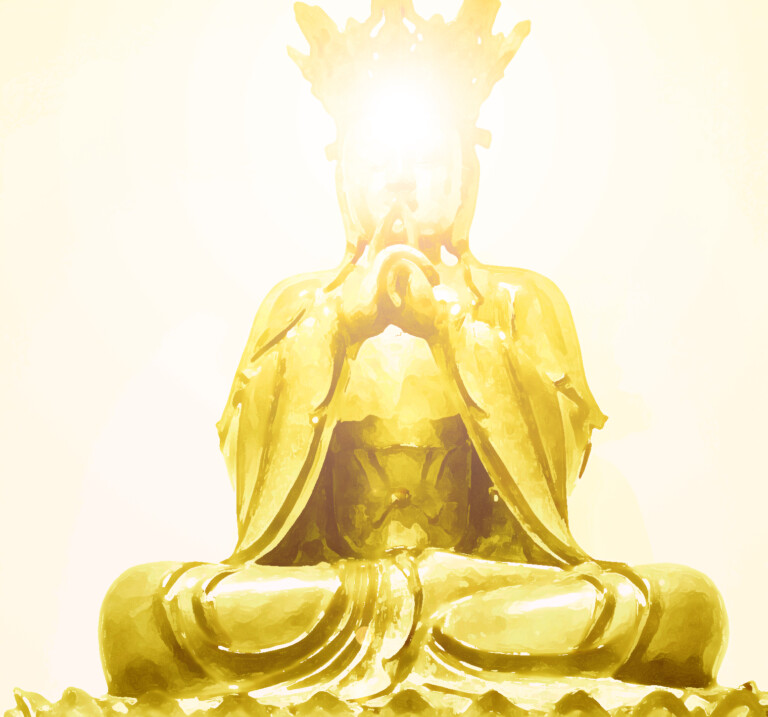
Sahasrāra is also known as the Source of Light because when it flowers within one’s awareness one sees the transcendent Light of consciousness, the Buddha-Nature. This is the beginning experience of Enlightenment. This Light appears to be shining from above like the radiant sun, which constitutes one spiritual station or level of awareness. But as one enters it more deeply by surrendering to it, by realizing that it is one’s own true nature, accepting it while simultaneously letting go of attachment and identification to physicality, to self, one’s awareness radically changes. It is as if one is becoming absorbed or returning back to the very ground of Being. The Light now is seen as emanating from within, becoming a halo-like disc that appears like a newborn sun around one’s head. This constitutes a higher spiritual station and level of consciousness. And as one surrenders to the ecstasy of Divine Love, the bliss of this bhakti [भक्ति], the Light becomes like a flaming lamp that overtakes and engulfs you completely. This reference to a flaming lamp is said to represent the light of Ātman [आत्मन्], the True Self, and the experience of absorption represents its ascent through realization into Paramatman [परमात्मन्], which is “The Absolute Self” or “The Self Beyond”. This transformative ascent into yet a higher spiritual station represents the process of Realization. The process of realization is the path of Enlightenment. The beginning of the path is true yearning for the Beloved, and the ending of the path is union with the Beloved; as the Islamic sages have said, “the ending is the same as the beginning.”
It is from this level of experience that we come to realize the Divine Presence as within us, and not just within but as the essence of our existence. What we regarded as self is completely dependent on God, and thus lacks inherent reality. As this realization occurs, thus transforming the very nature of experienced reality, then the journey through the void of separation is traversed eventuating in liberation through unity with God, what is called Moksha [मोक्ष], or perhaps better understood as complete bewilderment in Divine Witnessing, forgetting our own sense of a self, and thus, the complete loss of I–ness. In all revealed religious-spiritual traditions, the very notion of certain knowledge of God comes from this experience, and in terms of pictorial depictions of the Prabhāmaṇḍalas [प्रभामण्डल], we see the common halos of light, which are attempts to show this very experience.
He then also sees the light, which is in the form of a flaming lamp. It is seen to be shining like a newborn sun, the brightness of this flame encompasses oneself like the brightness of the newborn sun covers the space between the sky and the earth. This space is the very embodiment of Divinity in its full glory. This state is unchanging, all witnessing, and is like a circle of the sun, moon, and fire.
Shat Chakra Nirupanam - Schlokas 36
References to Light and to the flaming lamp is significant. In Islam for instance, when the Prophet Muhammad ﷺ spoke about his Enlightenment journey to Allāh, he said “I saw the Light”. By now, it would have been noticed in the prior discussions on the chakras and the sort of esoteric spiritual experiences that accompany their paths. Because this reference to Light and its imagery is so specific yet subtle, its place in this esotericism is significant, especially because it appears to be a shared experience in traditions that are otherwise totally disconnected from each other, namely, the Yogic tradition and Islam. The symbolism of Light is central to the discussion of the significance of the Lamp. While The Light represents Brahman, the Lamp represents Ātman, and yet again, this reference to a Light specifically in relation to a Lamp is found in Islam as a central and highly significant concept in Islamic spirituality.
The Verse of Light expresses this, and the key importance of the Lamp as a symbol of that Light, with that symbol itself being Muhammad ﷺ. Some exegetes say that this verse is a description of the Prophet ﷺ as the sign of God, who is like a sacred lamp in which is seen the Light of God.
God is the Light of the Heavens and the Earth. The symbol of His Light is as a niche wherein is a Lamp (the Lamp is in a glass, and this glass is as it were a radiant star), kindled from a blessed Olive Tree, neither of the east nor of the west, whose oil would all be glow though fire touch it not; Light upon light. God guideth to His Light whom He will and God citeth symbols for men, and God is the Knower of all things.
Qur'an [24:35]
According to Al-Ghazālī: “Allāh alone is the Real, the True Light, and beside Him there is no light at all.” Similarly Titus Burckhardt writes “There is no more perfect symbol of the Divine Unity than light.” Guénon also held this view: “Light is the traditional symbol of the very nature of the Spirit.” Frithjof Schuon discusses the metaphysical or esoteric symbolism of veiling and unveiling: “Esoterism or gnosis, being the science of Light, is thereby the science of veilings and unveilings, and necessarily so since on the one hand discursive thought and the language that expresses it constitute a veil, while on the other hand the purpose of this veil is the Light.”
This esotericism connotes the underlying reality of Light in the Yogic tradition as the beatific abode of true knowledge. In one saying, the Prophet Muhammad ﷺ had said that “God has seventy thousand veils of light and darkness; if He were to remove them, the radiant splendors of His Face would burn up whatever was reached by His Gaze.” And yet, it is the lifting of these veils that we actualize in the light of Truth.
Despite the common usage of referring to sahasrāra as a chakra, it is in fact not a chakra. The Yogis explain that it is more an outcome of activating and purifying all of the other chakras whereby our Kundalini reaches this level along the Sushumna nāḍī (नाडी). In Patanjali’s Ashtanga Yoga (Eight Limbs of Yoga), the flowering of sahasrāra is described as happening effortlessly, co-emergently, and naturally, and thus is said to be pathless. It is like a seed that when the conditions are right, when the ground in which it has been planted is fertile and has been watered and nurtured, then it will bloom, and this will either be experienced in this life or after physical death. The practice of Kundalini Yoga represents this entire process of cultivating the human being as if it were a fertile ground that contains a Divine seed.
The union of Shiva and Shakti occurs when the stream of energy in the two main nāḍīs, Idā and Pingalā, unite and rise within the Sushumnā nāḍī in agna. There is, however, one necessary condition for this unification to occur, which is the activation of anahata. This is because the seat of consciousness is in the Heart, which we experience as the golden light of Paramatman (परमात्मन्), and is referenced by the Lamp in the Yogic tradition and which corresponds to the Muhammadan Reality of Light, which is also symbolized by a light-bearing lamp that guides to God.
The Yogic texts mention this as Jivan Jyoti, the Living Light, the Divine Spark. As written in the article on the Heart chakra, the seat of consciousness is said to be located on the borders of the world of manifestation (the material world) and the world of the spirit. Anahata is said to be the key by which we may reach the Living Light.
Realization of Ātmān therefore takes place only when a simultaneous awakening of anāhata and sahasrāra occurs. When both gates are open, there is a direct connection from sahasrāra to anāhata through the Brahmā Nādī, or, the God Energy Channel. Only with the complete awakening of the anāhata does the golden flame of Divine Light, also described as the Bana Lingam, rise from the Heart and reach the level of Divine Consciousness through the Door of Brahman. Then, in the ocean of Divine Consciousness, the thousand-petalled Lotus unfolds. If the Heart is blocked then the flow of bhakti [भक्ति], which pertains to the energy of Divine Love, is unable to manifest and flow from the Crown chakra.
Characteristics of Sahasrāra
Whoever realizes the Supreme Brahman attains to supreme felicity. That Supreme Brahman is Eternal Truth (satyam), Omniscient (jnanam), Infinite (anantam).
Taittiriya Upanishad 2.1.1
The third day crescent moon is a symbol of Amrita, the Nectar of Immortality that Shiva had drunk after purifying the poison of the great serpent in vishuddhi. This metaphorical story represents the spiritual path as a process of purification, where poison represents impure karma, and impure karma represent the pain of [metaphysica] Ignorance (moha: मोह) of the reality of God. By purifying the poison of Ignorance one attains experiential knowledge of the truth of God, thus closing the pain of distance and separation. Amrita represents this knowledge in the form of direct experience. It is interesting to note that Amrita, being a nectar denotes a sweet taste, which corresponds to the Islamic concepts of dhawq, which also denotes direct experiential knowledge as taste. When Shiva had drunk Amrita, he entered into a state of absolute ecstasy and bliss, which again corresponds to the Islamic concept of wajd [وَجْد], translated as “ecstasy,” “spiritual rapture,” or “intense emotional state.” It refers to the profound feeling of joy, awe, and love that arises in the heart of a seeker when experiencing the Divine Presence or when meditating upon God’s attributes. The effects associated with drinking Amria and experiencing wajd [وَجْد], a word that also relates to [pure] Being which alone belongs to God, represents the deathless state, the state of immortality; immortality does not mean that one’s physical body will never decay, rather, it means that one’s awareness transcends the material world and sees only the light of true Being, which is God. This is shown in the various symbolic depictions of Shiva where he is wearing a crescent moon ornament in his hair, or by his head eclipsing the moon in the backdrop. The moon as Amrita represents the Light of the Divine, and to taste even just one drop of it is to succumb to the ecstasy and bliss of Divine Love. Were you to throw yourself into it fully you would become obliterated.
Like a bird that has removed the shackles of Maya (माया), jīvātmā (जीवात्मा) dives into the splendor of Paramātman (परमात्मन्); the individual soul dissolves into the Universal Soul, the Supreme Spirit, the Adamic Soul from which all individual souls emerged, ascending into greater realization of true reality. When it unites with the Supreme Self its existence dissolves – just as a river loses its name or identity when it flows into the ocean. Now it is in the sphere of pure consciousness, attaining ever more closely to a state of perfect God Consciousness, which is characterized by eternal Divine bliss – Sat Chit Ānanda Svarupa Ātma. And then, Paramātman (परमात्मन्) becomes one with Parabrahman (परब्रह्मन्), the “Supreme Brahman”. All Divine Attributes fold back into the eternity of the Divine Essence, dissolving, or rather, emerging into Oneness and Emptiness, which in fact denotes complete fullness.
If one is able to activate sahasrāra, even if it is only a drop of Amrita, one will enter into a state of ecstasy and bliss. It is said that a normal person would be unable to function in society as they would be completely intoxicated by Divine Love. The Realized Ones, the Buddhas and the Prophets, the Sages and the Rishis, and the true Saints of all ages, had reached this level of consciousness, but due to their profound discipline through religious instruction and training, submitting the animal spirit to their will, and conditioning their bodies as the modalities of knowledge in this world, were able to maintain their mental composure and their intellect while abiding in this state. It is within this state that when one speaks, it is not on behalf of or an expression of an individual ego, rather, it is an expression of the God. When men operate on this level, their intentions and motivations are completely different from the category of intentions and motivations that typically drive the rest of us, which on some level, all operate around the preservationist inclinations of the ego.
This experience is at the heart of various spiritual orders, especially the Mawlawiyya, the spiritual order of Rumi. After he had experienced the opening of the Crown chakra and tasted Amrita, he had gone into an ecstatic state. Afterwards, even though it had left him transformed, his experience became the source of his knowledge and inspiration at the heart of his poetry and religious instruction.
Access to sahasrāra, even if it is just on an intuitive level in the form of coherent metaphysical beliefs and yearning, is the basis of emotional wellbeing. When this pathway is open, and not obstructed by the darkness of Ignorance and destructive beliefs, then the Nectar of Immortality will continuously fuel our emotional ecosystem. The characteristic of sahasrāra is therefore wellbeing, abundance, gratitude, bliss, ecstasy, joy, and all various forms and manifestations of Divine Love. From an Islamic perspective, it could be said that it is the basis of having a good, or sound, or appropriate opinion of God, harkening to the hadith that states, “I am in the opinion of my servant.”
Element of Sahasrāra
The element of the Sahasrāra is Īshvara Tattva (ईश्वरतत्त्व). This Tattva is Ādi Anādi; Ādi means “without beginning”, Anādi means “without end”, and thus together means infinity. Īśhvara Tattva is the fourth of the five successive phases that occur during the unity of Shiva and Shakti (subject and object). Their unity is initiated upon the cosmic process of creation. Īshvara Tattva represents God’s infinite Power and infinite Knowledge. At this stage God conceives the creation of the universe, and this begins the mystery of creation in relation to the Creator. We find this same parallel in Islamic cosmology, that it is God’s Attributes of Power and Knowledge that join together to issues the amr or Creative Command “Be” by which creation comes into existence.
The concept of Tattva has a complex meaning and usage across the various schools of Hindu spirituality. They fundamentally mean the essence or principle of a thing. The gross elements have their Tattvas, which are depicted in their corresponding symbols or Yantras. What then is the essence of infinity? With respect to transcendent reality beyond the gross elements, a Tattva pertains to the essence of that particular dimension or level of reality where that dimension or level of reality pertains to a level of Divine Consciousness as a manifestation of Brahman, which together form the basis of our experiences.
Spiritually there are no differences between these five Tattvas, for on the transcendental platform from the vantage of the infinite everything is absolute. Yet there are also varieties in the spiritual world, and in order to taste these spiritual varieties one should distinguish between them.
As soon as this Tattva unites with an attribute (guna) it is bound and therefore limited. Once it is limited, then it represents a category of creation. All of creation is thus an expression of the consciousness of Divine Light through the symphonic interaction of Divine Attributes that manifests in myriad phenomenal forms as experience.
The Color of Sahasrāra
From a color psychology perspective and its correspondence with the metaphysics of the Crown chakra, the color violet corresponds perfectly. It is said to relate to the imagination and spirituality. It stimulates the imagination and inspires high ideals. It is an introspective color, allowing us to get in touch with our deeper thoughts.
The difference between violet and purple is that violet appears in the visible light spectrum, or rainbow, whereas purple is simply a mix of red and blue. Violet has the highest vibration in the visible spectrum.
Violet contains the energy and strength of red with the spirituality and integrity of blue. This is the union of body and soul, the energy of the sun and the energy of the moon, the feminine and the masculine, creating a balance between our physical and our spiritual energies. It perfectly corresponds with the Crown chakra because it represents non-duality and Oneness.
Activation of Sahasrāra

Although sahasrāra is a pathless path, there is a meditation that is focused on cultivating our ability to enter upon it.
"That here, the devi (the energy) is situated in the lotus of one thousand petals."
Lalitha Sahasranamam
The reference to “a thousand” petals is meant to convey infinity, uncountable, that there are too many petals to be counted. On every petal for each chakra there is a letter or sound, a seed syllable for activation called a bīja (बीज). A bīja means seed, and as a Yogic concept, it is a metaphor for the origin or cause of things, and is cognate with bindu (बिंदु). The term bīja is used for mystical “seed syllables” contained within mantras. What this means then with respect to the Crown chakra is that every sound, every vibration, every light, emerges from this place and returns to it. Any letter can be meditated on here to activate it.
The physical body is made up of the five gross elements. Each chakra, particularly the primary six, has an element, and each element has a bīja. The physical body is, at bottom, a manifestation of the energy body, and the energy body is a manifestation of the karmic seeds of consciousness. Therefore, the physical body is a manifestation of the karmic seeds of consciousness through the 108 chakras of the gross body. This means that each bīja of each 108 chakras corresponds to and is connected with the karmic seeds of consciousness that underlie our existence. As mentioned in Buddhism, there are 108 defilements, and thus also 108 pure states, which all correspond to these 108 chakras that make up the energy body. By sounding and meditating upon the seed syllables, we activate the corresponding chakras thereby allowing the nāḍīs of our higher spiritual nature to connect with our mind, emotions, and our body, ultimately in order to purify them. The knowledge, insights, and the release of tension that accompanies this knowledge, describes the process of purification through realization. It can be said to be the activation of the entire structure of our existence in this world enabling our existence to become intense, which is characterized by pure awareness and presence. When the appropriate seed sound is recited and meditated upon as a mantra it resonates in the chakra thereby purifying it, and by purifying our chakras we purify our karma.
Yantra: The Tantric Symbol of Cosmic Unity
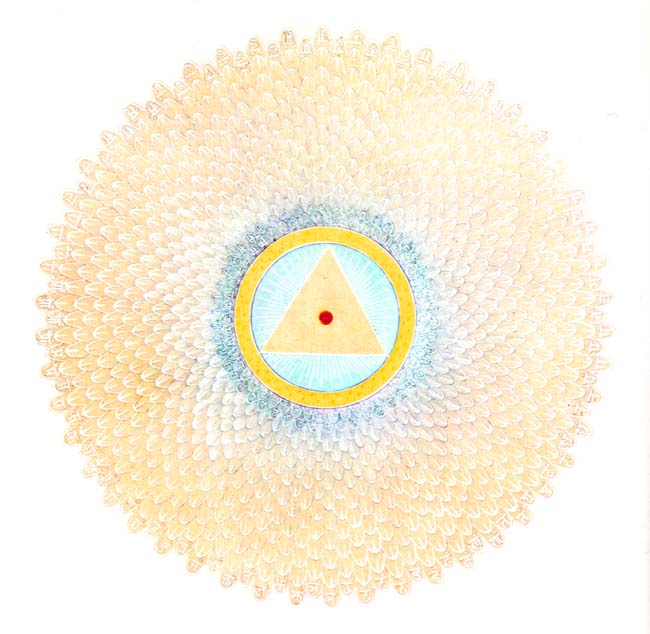
The Crown chakra is beyond all elements and contains all sounds. The mantra “Om” of agna, which is the “cosmic sound” of Pranava, is generally used for sahasrāra as well. This is because as the Unstruck Sound it is the source of all sounds that emanates from the center of anahata. Ultimately, one must meditate upon each chakra with their appropriate seed syllables, focusing the Mind on their location in the body. As the Mind enters into the deeper energetic states of consciousness and begins to abide within transcendent knowledge, a process of detachment must simultaneously occur. This process brings to the Mind the realization that “I am not the body, nor the mind (the contents of consciousness).”
Similarly, the Islamic mystics had an understanding of the unstruck primordial sound, which they called the saut al-sarmad, the “Sound of the Abstract Plane” or the Divine vibration that fills all of space. As the “unstruck melody”, it is said to be the first emanation of the command of God, “Be”, and thus is not produced by any physical phenomena that makes up the world since it is the source of the manifestation of the world in the first place. It is considered to be the source point of all revelation and that the experiences of the Prophets were therefore encounters with this inner sound. For example, the Prophet Muhammad ﷺ was said to have experienced this “unstruck melody” this in the Cave of Hira while meditating, which in some narrations he described as the ringing of a bell. Interestingly, the Buddha also reportedly described the sound of the ringing of a bell too.
While the Yogic tradition uses the mantra of “Om”, the Muslims use the dhikr of “Hu”. It is said that the sound of “Hu” strikes at the life source felt vibrationally just below the navel, similarly with with “Om”. Some scholars of comparative religion understand these to be two different cultural expressions of the same reality, influenced by differences in the physiology of language and the meaning of symbols and sounds. Ultimately, from an Islamic perspective, it is understood that God had formed mankind as He willed and sent Prophets and Messengers to the different nations ‘from amongst them’ so that they may understand the Divine Message.
One of the primary methods of activation or cultivating it is by meditating upon one’s Guru or spiritual teacher, or Shaykh in the Islamic tradition, smiling. For Muslims, this represents connection to the Prophet ﷺ, to the Muhammadan reality made possible by the inherited light of our teacher. The idea is that the expression of bliss manifests bliss, just like the smile of a baby brings us great joy. And so if we use some manner of technique of connecting with the expression of bliss then we will be manifesting bliss as a subjective experience within us. This is a significant concept with respect to the universality of this chakra in all religious-spiritual system. One’s spiritual master is meant to represent a caring authoritative figure, and that by meditating upon their loving presence, our innate attachment systems become activated because the vulnerability required here necessitates submission. But this submission is only possible when we have a healthy relationship with natural hierarchy, and thus, with the masculine and feminine principles within us. This understanding is reflecting in the teaching of Shaykh Abdal Qadir al-Jilani, that “whoever does not submit themselves to someone in particular will not benefit from anyone ever.” This is why we look for those great people, and we submit to them. Just like when we were children, we once again experience this sense of being in the presence of a transcendent caregiver, nurturing us with a loving gaze. Traditionally, this was a role fulfilled by the Awakened Ones, which is why impeccable character, perfect compassion and kindness, absolute mercy and selflessness were the primary markers of true knowledge as opposed to charisma and sophistry. However, it must be understood that it is not the spiritual guide per se that one is connecting to, rather, it is the Divine Reality of God that they, like sign posts, are merely pointing towards.
By immersing oneself in the meditative bliss of this chakra, by continuous practice of mudras, and by serving the gurus, one starts to have the vision of the everlasting Pranava in the form of embers of a flame created by the blowing of the wind.
Shat Chakra Nirupanam - Shlokas 36
The focus of the mind is to be on the crown of the head. If you can feel receptivity in that area just by using the awareness of the mind, then one’s ability for entry into sahasrāra is greater.
In Jewish mysticism, the Sephirot center known as Kether (crown), is similar to the sahasrāra. Situated at the top of the Tree of Life within the body, it represents pure consciousness beyond attributes, and thus, entry into the Divine Presence. Sufi schools of Islam have a system of subtle centers known as latifas, which are analogous to the chakra system of Yoga. The highest latifa, akfha (the most subtle) is also located at the crown of the head, and is the point of unity where beatific visions of Allāh are directly revealed within one’s awareness. The meditation of God Consciousness is such that our energy becomes focused there, thereby activating this region. As this region is activated more deeply, the blissful sensations will transport you to a different world altogether.
References
[1] Wisdom Library – Jivatma, Jīvātmā: 2 definitions
[2] Sahasrara Chakra – Om Swami
[3] Wisdom Library – Parabrahman, Para-brahman: 6 definitions
[4] Wikipedia – Lalita Sahasranama
[5] Khanna, Madhu (2003). Yantra: The Tantric Symbol of Cosmic Unity. Inner Traditions. ISBN 0-89281-132-3 & ISBN 978-0-89281-132-8. p.21
[6] Wikipedia – Bīja
[7] Sahasrara Chakra – Crown Center
[8] Tantra Kundalini – Sahasrara Chakra
[9] David Frawley – Inner Tantric Yoga: Working with the Universal Shakti – Inner Lotus Press, September 2008
[10] Johari, H. Chakras – Energy Centers of Transformation – Destiny Books, Rochester, NY, 2000.
[11] Vedanta Spiritual Library
[12] Symbol of Divine Light: The Lamp in Islamic Culture and Other Traditions -Nicholas Stone
[13] Wisdom Library – Prabhamandala, Prabhāmaṇḍala, Prabha-mandala: 5 definitions
[14] All About Ajna Chakra – Third Eye Energy Center – Shat Chakra Nirupanam
[15] Empowered by Color – The Color Purple and Violet
[16] Sivasakti – Yantras
[17] Simon Heather – How to Sound the Bija Mantras for the Chakras
[18] Sahih Muslim – Book of Faith: Chapter 79: Book 1, Number 0343
[19] Sahih Muslim – Book of Faith: Chapter 79: Book 1, Number 0342



I hope this message finds you well. I am reaching out to seek your guidance regarding an intensely profound spiritual awakening I experienced, which began with the 21 days of abundance guided meditation by Deepak Chopra in November 2020.
During this period, I found myself developing a heightened sense of intuition and a deepened connection to the world around me. For instance, I vividly felt the presence of a baby while at a zebra crossing, moments before a pregnant lady appeared. My connection to the Earth intensified, resonating with the Islamic view of humans being created from it, leading me to perceive it as a nurturing entity.
This awakening also brought about a heightened sensitivity in my physical senses; commercial soaps and shampoos became irritants, and my sense of smell became acutely sharp. Spiritually, verses from the Quran began to hold profound personal significance, providing messages and insights that felt divinely inspired. Particularly, the verses “صبغة الله ومن أحسن من الله صبغة ونحن له عابدون” and “لا يؤاخذكم الله باللغو في أيمانكم ولكن يؤاخذكم بما كسبت قلوبكم” came to me during moments of reflection, offering comfort and reassurance regarding my intentions and the purity of my heart’s pursuits.
As part of this journey, I experienced physical sensations of vibration during the last third of the night, aligning with the Islamic belief of Allah’s presence descending to the first sky, making my prayers during tahajjud deeply emotional and physically moving. Additionally, the recurring number 28 has become a symbol of this awakening, marking my age at the time and the date it began, suggesting a cyclical pattern in my life’s journey. I also became attuned to the Fibonacci spiral, which I observed in the natural whorl of my hair, my head vibrating drawing parallels to the circumambulation of the Kaaba and the spirals found throughout nature, from snail shells to galaxies. This pattern seemed to mirror the divine order and interconnectedness of all things.
However, amidst these profound experiences, I have encountered a dilemma. The Sanskrit mantras I have been chanting, which have been a significant part of my spiritual practice, are causing concern due to their traditional association with deities in Hinduism, which may conflict with my Islamic faith’s strict monotheism. Phrases like “I am the nourisher of the universe and the universe nourishes me” and “I am absolute existence” have brought me peace and yet, I fear they may be contradictory to the principles of Islam.
Given that the mantras and the intentions behind your meditations may not consider the concept of ‘false deities’ from an Islamic perspective, I deeply seek your advice on how to navigate these practices. Is there a way to continue benefiting from the meditative and reflective aspects of the mantras while ensuring that they align with my faith?
Your wisdom and insight into these matters would be invaluable to me. I am eager to continue this journey in a way that maintains the integrity of my beliefs while embracing the profound growth and connection I have experienced.
Thank you for your time and understanding.
Bismillah, forgive me for the delayed response.
Thank you for sharing your experience. I am not a teacher/guide, so I must be careful not to step outside my limitations. What I can say is that the spiritual path is always going to be characterized by expansive experiences and constrictive experiences. But we must not be afraid of the constrictive experiences as they represent the struggle in which progress and insights are made.
Shaykh Suhrawardi, in chapter 61 of his ‘Awârif al-Ma’ârif, describes the two inward states of the Sufi path, contraction (qabd) and expansion (bast), which are two states mentioned in the Qur’an [2:245], “And Allah gives contraction and expansion.”
One of the sayings of Imam Ali ع with regards to the path is “I am annihilated even in my annihilation.” This is the way of traveling the inward meditative path, where the inability to detach and pass through spiritual experiences leads to their appropriation by the ego. One thus becomes trapped in a new egoic identity in which it has become spiritualized, that is, it takes on a spiritual identity. In order to demonstrate its value, worth, and greatness, it uses spiritual experiences as a type of self-validation or confirmation of its greatness. This is very dangerous because it pertains to the attempt of Lordship, that is, of becoming a Lord. For this reason, I am highly critical of the modern day western New Age revision and appropriation of far-eastern Dharmic practices. Without proper ‘aqida [core theological premises] in place, these can lead to confusion and self-deification.
We have to be careful to avoid this, which is why we must become annihilated from even those higher experiences of annihilation. The masters of the path advise that it is not about having experiences of higher realities, it is about disciplining the ego and becoming liberated from its influence over us, and making your own will to be in alignment with Divine Will, which is expressed through the boundaries of the shari’ah. This is partly because the shari’ah has to do with proper conduct in this particular Realm in which we abide, all the while contrary forces pull us in the opposite direction. If a person can achieve this, they will that they will become natural human beings once again, functional creatures that are psychologically and emotionally regulated, and the virtues will become adorned in them. As one shaykh mentions, we live in this world, but for the next. So part of being a natural being is about living in this world functionally so that we may establish justice and right conduct within ourselves and outside ourselves. That is the Realm in which we live, the Realm of tests, tribulations, and labor.
Ibn Arabi writes, “whoever wishes to hasten the bliss of contemplation in other than its given Realm, and to hasten the state of fana'[annihilation] elsewhere than in its native place, and who desires absorption in the Real by means of obliteration from the worlds, the masters among us are scornful of this [ambition] because it is a waste of time and a loss of [true] rank, and associates the Realm with that which is unsuitable to it. For the world is the King’s prison, not His house; and whoever seeks the King in His prison, without departing from it entirely , violates the rules of right behavior, and something of great import escapes him. For the time of fana’ in the Truth is the time of the abandonment of a station higher than the one attained.”
The moment you make it all about experiences, you cling to them, and soon your purpose is about chasing them in order to confirm yourself. This leads to a very constricted state. On the other hand, while we might think that limiting our behavior according to Divine Commandments is itself ontologically and experientially limiting, the opposite is true. It is actually expansive in nature. One of the keys of success is removing distractions and entering into a state of simplicity and minimalism. This is an especially miraculous feat in the age of constant consumption of distraction where the will of the ego is pulling us in multiple directions amidst those myriad distractive impulses. To become unified around Divine Will through submission is the achievement of this Realm.
This is the first consideration, which is a word of caution and a clarification for context. The second is that the mantras you use remind me also of what we find in Sufi literature. We are reminded at once of al-Hallaj’s famous phrase for which he was [presumably] executed, “I am Truth (ana al-haq).
But what Suharwardi says is that this pertains to “special love”, which is a state of pure love for God. Suhrawardi uses a verse of al-Hallaj:
I am the One Whom I love
And the One Whom I love, is I.
We are two souls descended in one body.
If you see me, then you see Him;
And when you see him, then you see us.
It’s important to recognize that these types of expressions come from within a state of special love, not from without; they are uttered after intoxication, not prior. In this state, the boundaries of the ego are removed. Without limitation, and being boundless, consciousness exists without delineation of subject and object, experience and experiencer, observed and observer. This pertains to the station of Wahdat al-Shuhud, the station of pure witnessing. Typically, in the spiritual schools of Islam, when you enter into such a state, the proper adab [manners] is to not express anything. To say that “I am Truth”, for example, crosses the boundaries of manners or adab with God. However, it is also said that if one does so while in this state, it is not considered a transgression with God. One can hardly be blamed for their intoxication and its resultant transgression.
My concern with some of the practices you have described with respect to the mantras is that if they are being spoken from the perspective of the ego, that is from ordinary consciousness, then it may be an act of spiritualizing the self. This can feel good in the beginning, but its traps remain hidden beneath those feelings.
As I said earlier, when a person enters into those higher spiritual stations, the delineation between experience and experiencer disappear. And so, when you recite the Divine Name “Al-Muqeet” [The Nourisher], and you become annihilated from your self and absorbed into its realities, then you begin to imbibe the meaning of “The Nourisher”. And so the mantra that you are reciting becomes almost synonymous with this experience. But the difference here is that when you start off with saying “I am the nourisher”, for what is this “I” that you speak of? And how can this “I” be anything when compared to the true reality of God, who alone is real? And so this “I” must vanish, which is why we instead simply say the Divine Name of God, “Al-Muqeet”, that Allah alone is the Nourisher. And “I” do not exist, and so all there is, is “The Nourisher”, which is now one’s experience of Self.
As I have written in my various posts on the chakras, from the perspective of the Islamic criterion of Oneness, which is in alignment with traditional Yogic beliefs, idolatry and polytheism are eschewed. The references to male and female deities are not to deities in the same way that the various names of Allah are not references to different deities by those names, but rather are names that pertain to the essential attributes of the male and female principles that are associated with these particular spiritual stations of the soul. That being said, I do think that we need to be careful not to mix spiritual practices together, even if there is validity in them because it can lead to confusion. Some of the confusion can come from not having a true understanding of the spiritual concepts being used. And unless you are someone that has been trained by masters of those traditions, it would be very difficult to understand them to a point where you can use them reliably in your practice.
But I don’t think it’s problematic if you’ve attained some insights and experiences that have clarified for you the true nature of things, as long as you ensure they are in alignment with our Tradition’s understanding since it contains the Criterion, informed by the metaphysical first principles, which are all but lost among the world religions today.
These are my initial thoughts, and again, I am not a teacher so take what I say with a critical mind.