

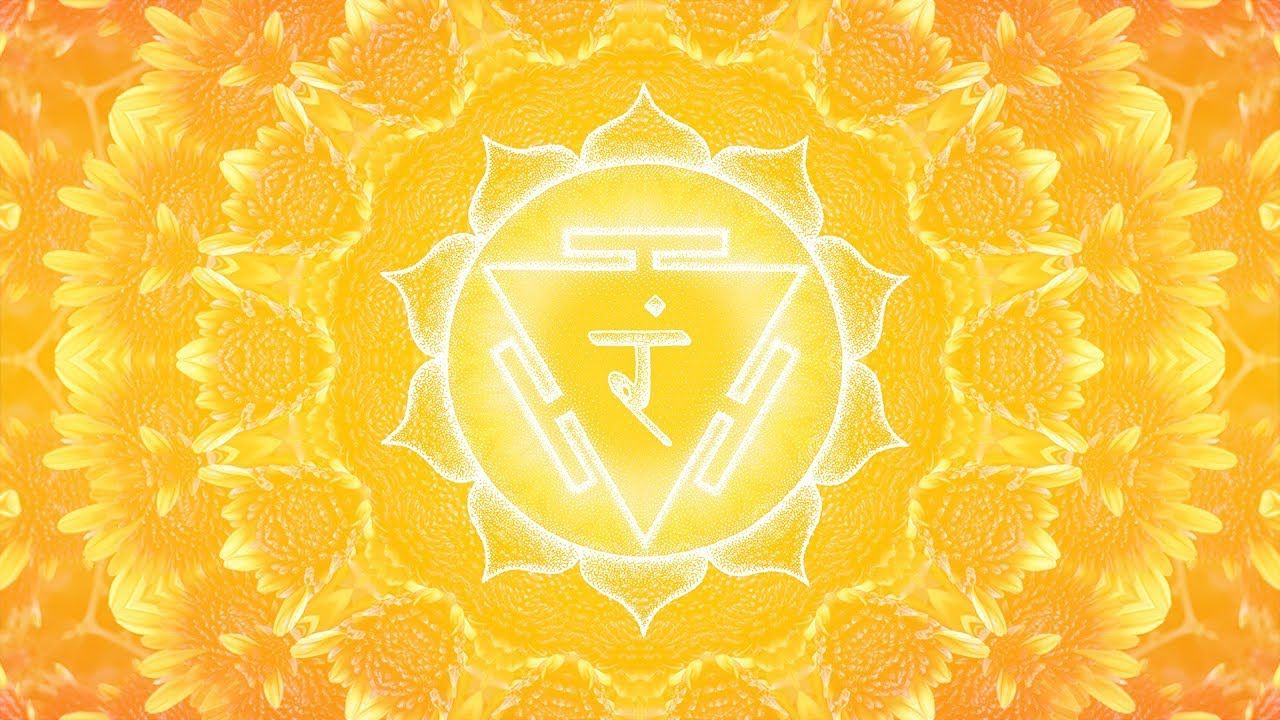
At the base of the naval lies manipura, shining with the brightness of a heavy rain cloud.
Shat Chakra Nirupanam – Schlokas 19
NOTE: This series on the system of chakras is meant to provide an analysis through the spiritual lens of Islam, which is rooted in the purifying principle of One. It is not an endorsement of polytheistic systems, which the Yogic system denies anyways, nor is it an endorsement, guide, or instruction for any spiritual practices or prescriptions. Where the term ‘god’ or ‘deity’ is used, it is used loosely only to retain common language while understanding these words are metaphors. Where practices are mentioned, it is only informational. While the theme of these posts is to explore the deeper metaphysical architecture of these systems and spiritual technologies thereby enabling us to see the principle of One that pervades all revealed religions as a proof of God, it does not imply the doctrinal teachings of the school of Perennialism (different from “perennialism”).
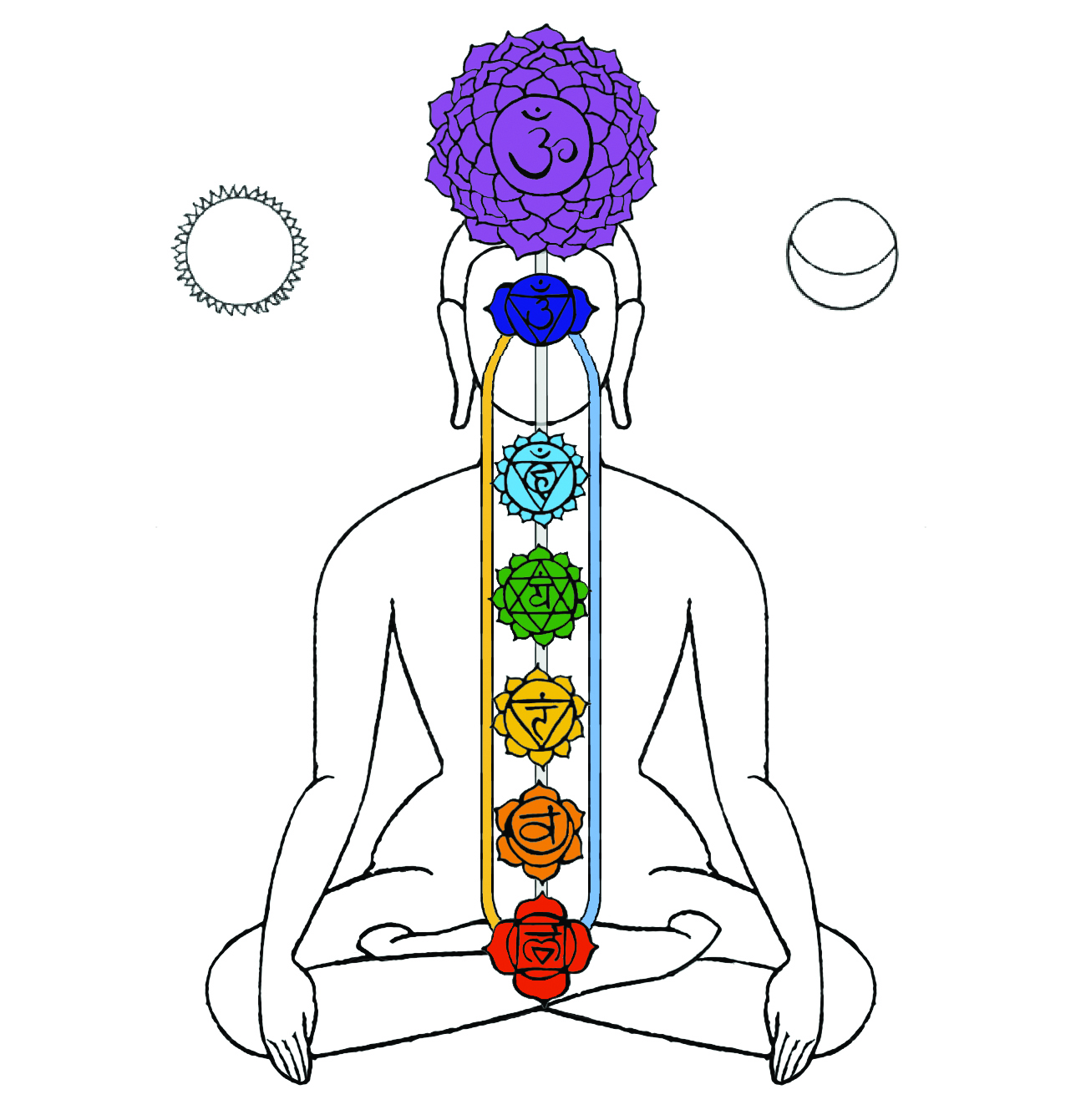
The Metaphysics of Manipura
Manipura (or manipuraka) chakra is located around the solar plexus just at the base of the navel. It is seen as the center for hunger, nourishment, and ambition. it is associated with the natural element of fire and is directly linked to our sense of self, and thus, self-esteem, sense of purpose, personal identity, individual will, digestion, and metabolism. From this perspective, there is an understanding of the relationship between what we eat and the manifestation of our self or the process of becoming.
Manipura is a consequence of swadhisthana and muladhara. While they together generate life, manipura takes it and expresses it, almost through a process of transmutation. As a result, the solar plexus chakra is said to be the seat of power that directs the body through volition. The self that had been cultivated through the foundation of the root chakra and formed in the sacral chakra is finally expressed through the solar plexus center. This is evidenced in the solar plexus chakra being the place where all of the nāḍīs (नाडी) or channels of prana converge. Its association with the digestive system and its transmutation of food into energy is a physical correlate of the metaphysical system and its transmutation of Kuṇḍalinī into prāṇa and then the expression of prāṇa in the body*. It is the transmutation of the metaphysical and energetic to the physical.
The solar plexus chakra corresponds to the lower dantian (下丹田) in Chinese tradition, translated as the “elixir field”, “sea of qi”, or simply “energy center”. It is where the process of developing the elixir of life energy by refining and purifying essence (jing) into vitality (qi) begins, which corresponds to kuṇḍalinī and prana. In doing so, our sense of self as a manifestation of a spiritual reality in this world is also cultivated.
Manipura translates from Sanskrit as “city of jewels”, alternatively translated as “resplendent gem” or “lustrous gem”. Manipura is often associated with the colors yellow, blue in classical tantra, and red in the Nath tradition.
Each chakra is associated with a corresponding “god” and “goddess”, which in reality are personifications of the attributes of God into masculine and feminine energetic forms that are expressed through particular qualities.
In this chakra lies what is commonly called ‘the god of fire’ named Agni. Agni is the elemental force of transformation and digestion. It is sometimes called Vahni (meaning “the carrier” or “the sacrificial fire”). In the Manipura chakra, Agni/Vahni represents the raw, purifying energy of fire that governs Jathar Agni (digestive fire), converting food into energy and life, it is the vitality by which the self is expressed physically. This purifying fire is said to meet the Prāna Vāyu (inward breath) and Apāna Vāyu (outward breath) at the navel, creating Samāna Vāyu — the balancing life energy responsible for digestion, absorption, and assimilation. This tells us that the breath of life, the inhalation and exhalation, as in the Chinese tradition, is inherently linked to the inner fire of our Being that governs transmutation. Agni/Vahni is often depicted as shining red, with four arms, holding a rosary and a spear, seated on a ram, while making the gestures of granting boons (vara mudra) and dispelling fear (abhaya mudra).
Within the lap of Agni – within the very heart of the fire – dwells Rudra, who is the oldest and most primordial form of Shiva. But Rudra is not separate from Agni but rather the consciousness that animates and directs the fire. Rudra’s presence signifies that the fire of transformation is not blind or mechanical but guided by higher intelligence, which is only possible when the prior chakras, the root chakra and the sacral chakra, have been purified and cultivated. Rudra is described as being smeared with white ashes (symbolizing the destruction of the ego and the impermanence of all form), three-eyed, with a silver beard, representing ancientness and having the perspective of both the physical and spiritual dimensions of reality, seated on a bull (dharma) or a tiger skin (mastery over the lower egoic mind, which dwells in the “forest of desires”), and whose hands make the gestures of granting boons and dispelling fear. Rudra is described as the “destroyer of creation” . This destruction, however, is not annihilation in the negative sense but the dissolution of illusion (māyā), the burning away of false identification, and the clearing of space for authentic being.
This “process of purification by fire” corresponds directly to the Islamic mystical understanding of dhikr that uses breathing meditation and the recitation of lā ilāha illā Allāh. Shaykh Ibn ʿAṭāʾillāh described this invocation as an “active flame”: when it meets the firewood of the soul’s impurities, it ignites; when the house of the heart is dark, it illuminates. Imam al-Ghazālī called this process tazkiyah al-nafs (purification of the soul), which is the “washing” of the soul from blameworthy character traits such as envy, arrogance, self-admiration (ujub), showing off (riya’), and stinginess. These are precisely the manifestations of the unintegrated and impure ego that the fire of Manipura is meant to consume. This is why the spiritual aspirant often experiences the recitation as “heavy”, it is experiencing the rigor of the Divine Names such as al-Qahhār (The Subduer), al-Jabbār (The Compeller), and al-Mumīt (The Bringer of Death), which actively burning away the dross of the lower self. These names correspond to Rudra who directs the purifying fire of Agni.
Al-Qahhār (The Subduer, The Prevailer) denotes God who subdues all opposition, who breaks down false structures and overwhelming power that compels transformation and crushes the ego’s resistance. Within the context of lā ilāha illā Allāh, this Name is active in the negation phase – “lā ilāha” – which denies, negates, and subdues everything other than God. This aspect subjects the impurities within us to the fire of purification, which is said to be a heavy and painful process as are purified by fire.
Al-Jabbār (The Compeller, The Restorer) is the One who compels creation according to His will, mirroring the consciousness or the higher intelligence of Rudra that embodies the fire of Agni. This Name denotes the One who sets broken bones and restores wholeness. This Name has a dual quality: it compels the ego to submit through the fire of affliction, yet it also restores and mends what is broken in the soul. This mirrors Rudra’s dual nature: destruction (ashes) and creation (ornaments).
Al-Mumīt (The Bringer of Death) denotes the One who causes death, not not only physical death but principally the death of the ego, of false attachments, of the lower self (nafs al-ammārah). This Name operates in the negation of “lā ilāha”, the death of everything that claims divinity besides God. As the Sufi masters teach, the constant repetition of lā ilāha illā Allāh “expels” the perception that anything other than God has independent existence or Lordship, which is a subtle form of hidden shirk or idolatry (associating partners with God). Al-Mumīt is another aspect of the fire that burns away this false attribution.
From the ashes of the ego left behind in the wake of “lā ilāha” emerges the reborn self in the light of “illā Allāh”. Here we see the manifestation of the Divine Name, al-Nur (The Light), which denotes the One who illuminates the heavens and the earth; the source of all light, both physical and spiritual. The reborn self emerging from the symbolic ashes covering Rudra emerges the purified self, first experienced as the ecstasy of rebirth in the illumination of al-Nur, the Divine Name that corresponds to the “lustrous gem” after which this chakra is named. The “intoxicated state” of Lākinī is the ecstasy of being illuminated by Al-Nūr, an experience that the knower or the gnostic experiences as they emerge in the light of the Eternal.
This illumination, however, is not something the seeker can acquire through effort alone. In Sufi terminology, the spiritual state of ecstasy and expansion is known as a ḥāl (plural aḥwāl) — a spiritual condition that comes to the Sufi from time to time during his journey toward God. The aḥwāl are graces of God that cannot be acquired or retained through an individual’s own efforts. When the soul is purified of its attachments to the material world, it can only wait patiently for those spiritual gifts of God, which, when they come, fill the Sufi with the desire to continue his journey with new energy and higher expectations.
This is precisely the significance of the boon-granting gesture (vara mudra) that both Rudra and Lākinī display. The boon cannot be seized or acquired by effort, rather it must be bestowed by God. The gleaming gem of Manipura, the “city of jewels”, is not a prize earned but a gift received after one has struggled within fire of purification, what Islam calls the greater holy struggle (jihad an-nafs), and the heart has been emptied of its idols. The purified self, having been reduced to ashes by Rudra’s fire, is now a hollow reed through which the divine breath may blow, a vessel capable of receiving the ḥāl. This hal or spiritual state is symbolized by the energy of the female principle, here in the Yogic tradition called Lakini.
The Divine Feminine energy – the manifestation of God’s Attribute of Knowledge (ʿIlm) as the feminine principle – resides in this chakra and is represented by Lakini. She is described as the one who provides all good things, seated on a red lotus, with a dark blue or black vermilion complexion, three faces, three eyes on each face, and four arms holding a thunderbolt (vajra), an arrow, and fire, while her fourth hand makes the gesture of granting boons. She is said to be “exalted with the drinking of ambrosia”, which is symbolic for the drinking the nectar (amrita) that drips down from the crown chakra (Sahasrāra), representing her reception of the highest spiritual wisdom after the fire of purification has completed its work. She is described as being in an intoxicated state of mind, a symbolic representation of the ecstasy (sukr) of entering into higher states of consciousness associated with Enlightenment and omniscience.
From an Islamic lens, Lākinī corresponds to a constellation of Divine Names that together describe the ecstatic state of the purified self bathed in divine proximity:
Al-Basīṭ (The Expander), which denotes opposition to spiritual constriction. It is the Divine attribute that expands the soul and is closely associated with wajd (ecstasy), a state where the heart fills with overflowing spiritual joy. Lākinī’s intoxicated state is the experience of al-Basīṭ, where the chest is opened, the heart expanded, the self no longer confined by the narrowness of ego but flooded with the vastness of divine presence.
Al-Wadūd (The Most Loving) speaks to the intoxicating love that binds the servant to the Creator through direct connection. When a believer deeply experiences the Love of Allah, it naturally leads to states of spiritual transport, intoxication (sukr), and ecstatic longing. Lākinī’s ecstasy is not mere emotional excitement but the ecstasy of love, where the lover who has been burned clean of all other than illusory loves exists only in the radiance of the Beloved.
Al-Baṣīr (The All-Seeing, The Clear-Sighted) is derived from the root *b-ṣ-r* (sight, perception, insight, clear vision), and thus denotes direct perception, which is the state of having one’s vision fully illuminated by divine light and witnessing realities directly without veil or obstruction. Lākinī’s three faces and three eyes on each face symbolize the capacity to perceive all dimensions of reality – past, present, future; physical, spiritual, and divine – without obstruction. Her intoxication is not the blurring of vision but its clarification, for the ecstasy of mushāhada (direct witnessing) in which the purified self sees is by the light of Al-Nūr itself. From the perspective of ordinary consciousness, they may appear insane. But from their perspective of extraordinary consciousness, everyone else is insane, for how could one not be enraptured in ecstasy knowing how near God is to us?
Al-Ḥayy (The Ever-Living) is the Name that is central to realizing that true life is found entirely in God. The overflowing of Divine Life into the mortal heart creates a transcendent, ecstatic state of being. Lākinī’s “exaltation with the drinking of ambrosia” is precisely the result of drinking the nectar of eternal life, the amrita that drips from the crown. She has died to her false self (by the fire of al-Mumīt) and now lives by the life of Al-Ḥayy, and her subsistence (baqā’) is not her own but a reflection of the Ever-Living.Al-Baṣīr (The All-Seeing, The Clear-Sighted) is derived from the root *b-ṣ-r* (sight, perception, insight, clear vision), and thus denotes direct perception, which is the state of having one’s vision fully illuminated by divine light and witnessing realities directly without veil or obstruction. Lākinī’s three faces and three eyes on each face symbolize the capacity to perceive all dimensions of reality – past, present, future; physical, spiritual, and divine – without obstruction. Her intoxication is not the blurring of vision but its clarification, for the ecstasy of mushāhada (direct witnessing) in which the purified self sees is by the light of Al-Nūr itself. From the perspective of ordinary consciousness, they may appear insane. But from their perspective of extraordinary consciousness, everyone else is insane, for how could one not be enraptured in ecstasy knowing how near God is to us?
What the solar plexus chakra thus represents, in totality, is transformation from the material to the spiritual, from the physical to the metaphysical, from ignorance to knowledge. This transformation is a process of purification by fire that burns away the illusion of the ego. From the ashes of the ego, however, we may experience the ecstasy of rebirth and emergence into higher Being, which is characterized by the knowledge of the rational intellect. The will of fire, all of the energy of our Being, is directed towards this very purpose of trying to become a fully fledged being.
The Element of Manipura

The solar plexus chakra is associated with the element of fire, which represents the power of transformation. The symbol or yantra of this transformative fire is the downward red triangle tattwa. In the classical Tantric texts, this downward red triangle is described as the yoni of fire, which is understood as the womb from which the purifying flame is born. Inside this triangle is the seed mantra “Raṃ” (रं), the vibration that awakens the fire element within the practitioner and its capacity to transform not only food but also impressions, emotions, and karmic residues into the fuel for spiritual awakening. The red color of the triangle symbolizes both the heat of purification and the lifeblood of vitality, which is the passionate, active principle that drives all transformation.
Traditionally the downward facing triangle represents the earthly realm. The solar plexus chakra is understood as the meeting place and the culmination of both the muladhara chakra and the swadisthana chakra, which pertain to the earthly realm. These three chakras therefore constitute the physical dimension of the body and are the avenues by which it achieves its full potential. From an Islamic perspective, it highlights the emphasis that is placed on consuming food and drink that is not merely halal [legally permissible] but also tayyib [pure] because this, in some metaphysical way, represents the link between us and God in terms of the descending of God’s Will upon us as the manifestation of our Being, that is to say, the ongoing process of our creation and formation in this world. In this sense, by consuming what is pure, we become pure. From one end of our life to the other end, from our birth to our death, we are being formed and created. This is alluded to in this narration:
"O people! Allah is Pure and, therefore, accepts only that which is pure. Allah has commanded the believers as He has commanded His Messengers by saying: 'O Messengers! Eat of the good things, and do good deeds'. (23:51) And He said: 'O you who believe! Eat of the lawful things that We have provided you".'. (2:172). Then he ﷺ made a mention of the person who travels for a long period of time, his hair are disheveled and covered with dust. He lifts his hand towards the sky and thus makes the supplication: 'My Rabb! My Rabb!' But his food is unlawful, his drink is unlawful, his clothes are unlawful and his nourishment is unlawful, how can, then his supplication be accepted?"
Prophet Muhammad ﷺ
Characteristics of Manipura
When our consciousness has reached manipura it means that we have overcome the negative aspects of swadisthana. Manipura contains many precious jewels such as the qualities of clarity, self-confidence, bliss, self-assurance, knowledge, wisdom and the ability to make correct decisions. It is the domain of willpower, and is thus associated with qualities such as confidence, assertiveness, ambition, and so on. But where and how it is directed is a reflection of our spiritual health. If it is directed towards the interests of the lower animal realm, such as climbing social dominance hierarchies and obtaining status, fame, popularity, wealth, and so on, then it reflects a corrupted root chakra and sacral chakra that is still dominated by the animal self. But if it is oriented towards becoming a fully fledged being, towards Enlightenment, then it is a sign of spiritual health. This drive can manifest through various avenues and paths in life.
As you move up along the Sushumna nāḍī (नाडी), the energies associated with the chakras become increasingly subtler. Think about what that means in terms of our existential concerns in life. It is when we are hungry that we focus on satiating that hunger. If we are always hungry, in a broader sense beyond the stomach, then our entire lives will revolve around satiating that hunger. This is where our will is directed, which represents the uncultivated solar plexus chakra. But when we lack hunger, we feel nourished. This means that our lives may now focus on and revolve around something other than hunger, something higher than a particular hunger and satiation. This represents the cultivated root chakra and sacral chakra because when they are satiated from lower animal impulse through detachment and perception, then it is as if the cultivated spiritual energy is nourishing us on a fundamental level allowing now for the soul to orient itself towards the higher aspirations of existence. The characteristic of the solar plexus chakra is will power and volition, so where that is directed reflects the state of the two lower chakras.

Signs of a Blocked Manipura
While signs of a blocked solar plexus chakra often include physical signs, especially in regards to digestion or feelings of lethargy, it is more prudent to focus on the signs related to our overarching experience of life as it is happening within us in terms of consciousness.
The solar plexus chakra is associated with hunger and nourishment. Hunger and nourishment summarize the human condition. As Shams Tabriz said, “The purpose of a need is to be without need. The purpose of a desire is to be without desire.” It is not the water that we desire, rather, it is the quenching of the thirst that we desire. Once our thirst or hunger has been quenched, our desire for water or food no longer exists; it was never the water or the food that we desired, rather it was the absence of thirst and hunger that we desired. We should therefore always ask ourselves, when we find that we have a deep desire for something or even someone, what is it that we really want through them? Typically, when there is a deep compulsive yearning, it pertains to some unmet need for existential validation. Likewise, Socrates described the nature of pleasure and pain as existing in relation to each other. A thing is only as pleasurable insofar as it is distant from pain, which means that the greater the pain we feel then the greater the pleasure we also feel when the pain has left us through some means. The human condition, with respect to desire, therefore, is ultimately to be without desire. But this places us in a never ending cycle, for the desire to end desire is in itself a desire, and so the desire of desire is to extinguish itself. Our will becomes self-abasing, contradictory, trapped.
This cyclical dynamic of pleasure and pain, of desire, of hunger and nourishment, describes the realm of lower animals. As al-Ghazali describes, animals are satisfied when they are full, and dissatisfied when hungry, and their instincts operate around removing that dissatisfaction of hunger as it arises. When the lower chakras, the muladhara and the swadhisthana remain uncultivated, then our willpower as it manifests in manipura chakra revolves around this cyclical process of the animal self. This animal dynamic characterizes our existence in life and we become trapped in this cycle of anxiety and the need to extinguish that anxiety.
Signs of an Open Manipura
However, if we are able to exit the cycle of hunger and nourishment, of desire, then true ambition arises from within. This true ambition and sense of power and drive is the sign of an opened and cultivated solar plexus chakra.
Ambition is perhaps represented by the symbology of the jewel. It is said that the highest aspiration or ambition in life is spiritual in nature, which is Enlightenment. While many people talk about ambition in terms of achieving higher status or levels of wealth to quench the thirst and hunger of their Being, those are understood as the ambitions of lower animals. To the true kings and queens, the highest ambitions pertain to attaining higher position within the spiritual hierarchy or nearness to God. It is these people who have glimpsed at the true treasure of the soul, the profound jewel of consciousness. It is that which if beheld by a person’s heart, all desire, all seeking, all chasing in this world would end, and they would dwell within the bliss of True Being. Our actions in the physical world would then come to reflect that in some way according to our talents and aptitude.
The Color Psychology of Manipura
The color that is commonly used to represent and activate manipura is yellow.
The color yellow relates to acquired knowledge. It is the color which resonates with the left or logical side of the brain stimulating our mental faculties and creating mental agility and perception. It is associated with action in the world, and thus, with willpower and volition.
Being the lightest hue of the spectrum, the color psychology of yellow is uplifting and illuminating, offering hope, happiness, cheerfulness and fun. In the meaning of colors, yellow inspires original thought and inquisitiveness.
References
[1] Manipuraka – Chakra of Fire, Hunger & Ambition
[2] Manipura – The Maintenance Center
[3] Chakra Tune-Up: Intro to the Manipura
[4] Manipura: Solar Plexus Chakra Meditation For Healing and Balancing
[5] KUNDALINI: FREQUENTLY ASKED QUESTIONS AND SELECTED REFERENCES
[6] Yoga in Daily Life: Manipura Chakra
Notes
* Prana has been translated as the “vital breath” and “bio-energetic motility”; it is associated with maintaining the functioning of the mind and body. Kundalini, in its form as prana-kundalini, is identical to prana ; however, Kundalini also has a manifestations as consciousness and a as a unifying cosmic energy. One could ascribe these same aspects to prana as well so past a certain point these become distinctions without differences.



Thank you, very useful information.