

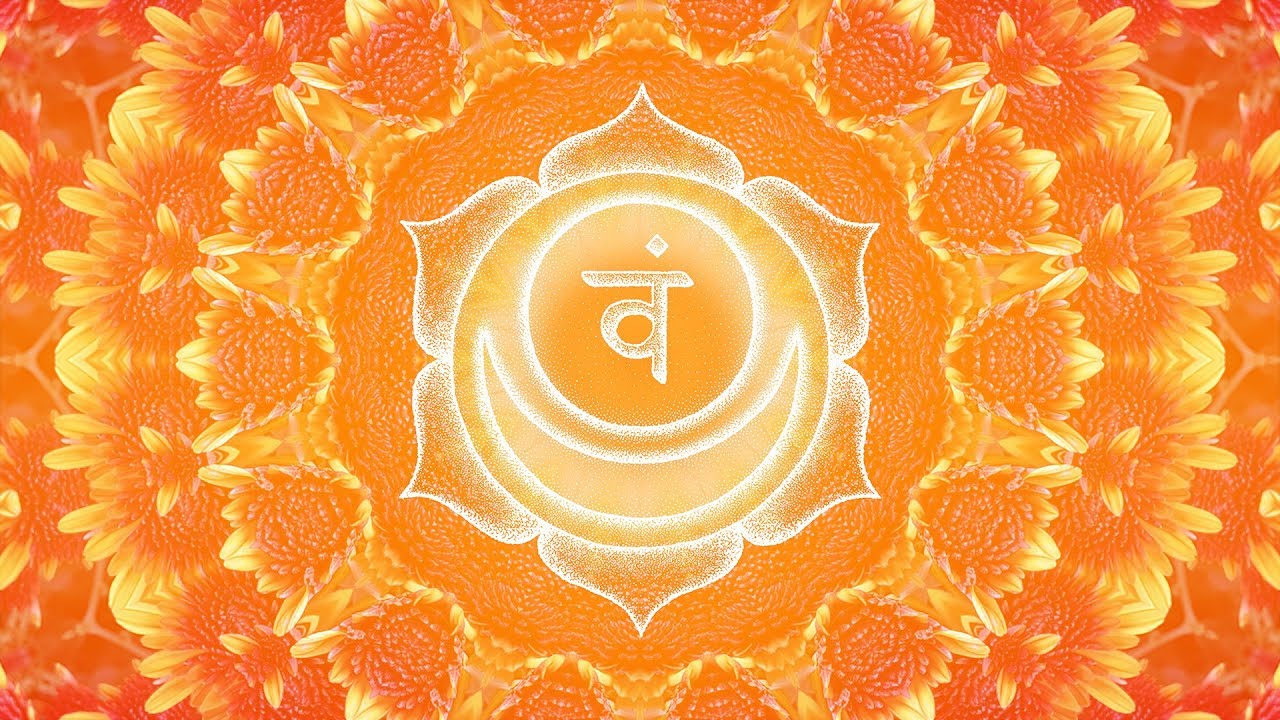
One who meditates on swadhisthana gains mastery over their internal enemies (false identifications) and all other Doshas (unique physical and mental constitutions and life energies)…such a person becomes a lord of Yogis, and shines with the brightness of a sun, dispelling the darkness of illusion (existential Ignorance about the nature of self).
Shat Chakra Nirupanam – Schlokas 18
NOTE: This series on the system of chakras is meant to provide an analysis through the spiritual lens of Islam, which is rooted in the purifying principle of One. It is not an endorsement of polytheistic systems, which the Yogic system denies anyways, nor is it an endorsement, guide, or instruction for any spiritual practices or prescriptions. Where the term ‘god’ or ‘deity’ is used, it is used loosely only to retain common language while understanding these words are metaphors. Where practices are mentioned, it is only informational. While the theme of these posts is to explore the deeper metaphysical architecture of these systems and spiritual technologies thereby enabling us to see the principle of One that pervades all revealed religions as a proof of God, it does not imply the doctrinal teachings of the school of Perennialism (different from “perennialism”).
The Metaphysics of Swadhisthana
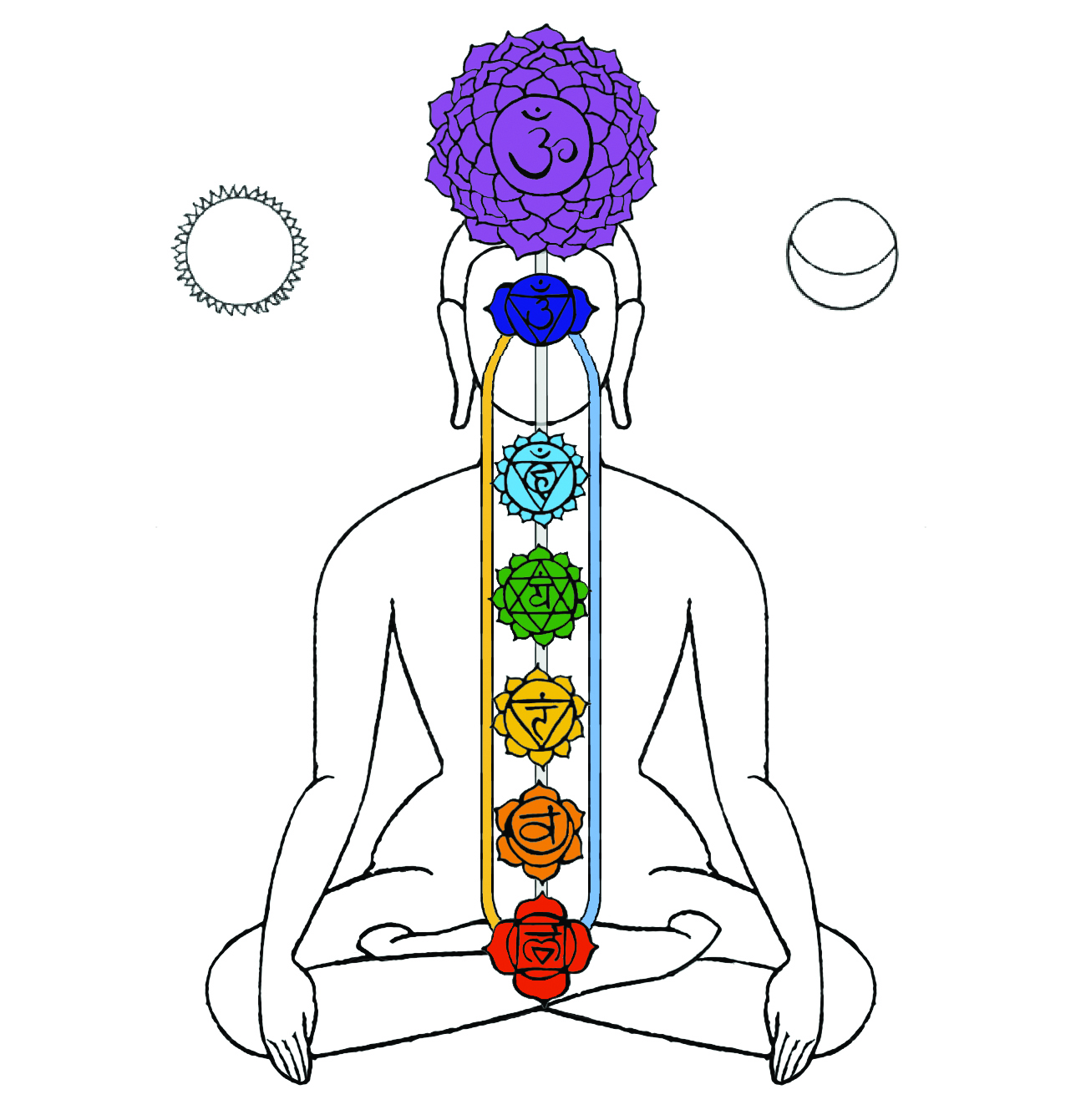
Swadhisthana means “the abode of the self.” It is located just above the genital organ. How we have cultivated muladhara or the root chakra will determine the condition of swadhisthana or the sacral chakra. Aside from it being the site of the formation of the self, its significance is that it can give us a lens through which we can measure and improve our mental, emotional, and physical flexibility through our relationship with our self.
So strongly do we identify with the body and construct a false and limited self based on its impulses, needs, and tendencies that we end up reducing the ontology of our existence down to mere consumption, especially the consumption of sexual appetite, which appears similarly yet differently in men and women. This pertains to the biological imperative to reproduce, which is felt as sexual impulse. When our root chakra is left uncultivated, we perceive this drive purely on the level of the profane, as purely biological in nature. But because sexual energy represents the intermingling of the two cosmic polar principles of the masculine and the feminine that brings about the world itself, when our root chakra remains uncultivated and polluted, we are cut off from having this depth of understanding and relating to this fundamental energetic aspect of ourselves. The intermingling of the masculine and the feminine energies is what underpins all existent phenomena, and because it is the creative process itself whereby the metaphysical instantiates as the physical, our relationship with it, that is so say, the state in which its energy abides within us, determines the trajectory of our unfolding and formation in this world. When the root chakra is cultivated, and the sacral chakra acts as a sort of place for the cultivation of the self, we awaken to awareness of the creative energy of God as something felt within us as a deeper yearning for the Absolute, for the Higher, which cultivates the self. There is a sort of ongoing recollective and creative process that characterizes our perception of the world as a deep sense of wonder at the miracle of life. This energy therefore that defines the formation of the self, which abides in the sacral chakra, either causes us to descend into and even below the dimension of the animal, or to ascend into the dimensions of high celestial realities.
This understanding of sexual energy, as a fundamental human passion, is explored by ibn Arabi and other Islamic mystics. He says that without these two energies, which he identifies as passion or desire, and anger or caprice, the soul would not move at all – neither upwards nor downward. The angels, he says, were created without these two energies, and thus remain fixed in the orbit in which they were originally created. This speaks to the broader occult understanding of the nature of will as desire and desire as well, and this will, this desire, is what represents or defines the energy of the soul itself.
In the Yogic tradition, the sacral chakra – located just below the navel – is the center of creativity, procreation, emotional fluidity, and the generative power of life itself. It is often associated with the element of water (apas), which flows, adapts, seeks connection, and gives birth to all living things. Where the root chakra (Mūlādhāra) is the foundation of earth, characterized by stability, survival, and the root of physical existence – the state of Being, the sacral chakra is the principle of movement, relationship, arising, and unfolding – it is the process of Becoming. It is the place where the static potential of the root begins to stir into dynamic expression.
As with Mūlādhāra, the sacral chakra is governed by a symbolic pairing of masculine and feminine energies. Here, the Divine Masculine is represented by the personification of Vishnu – the Preserver, the sustainer of cosmic order (dharma), and the principle of compassionate maintenance of creation. The Divine Feminine is represented by Rākinī (or Rakini), who is described as dark-hued, fierce yet beautiful, holding a sword, shield, skull, and lotus, which are metaphorical symbols of the cutting away of illusion and the bestowing of spiritual knowledge since it is the light of knowledge that effaces the darkness of ignorance. Together, Vishnu and Rākinī represent the intimate coupling of the Divine Masculine and Divine Feminine energies within the human being. The sacral chakra is thus the site of their intimacy, and therefore the site of creation and creativity itself. It is seen as the realm of the waters of life, the primordial ocean from which all forms emerge, are sustained, and eventually dissolve.
In Islamic terms, the masculine energy of Vishnu corresponds to the Divine Attribute of Power (Qudrah), but here in its sustaining rather than commanding aspect, which the Qur’an references as al-Qayyum. Al-Qayyum (the Self-Subsisting, the One by Whom all things are sustained) is linguistically derived from the root *q-y-m*, which carries the core meanings of standing, upholding, and managing affairs. While the child Brahmā in Mūlādhāra represented Power as an expression of the creative process of God through the Creative Command “Kun” (“Be”), Vishnu represents Power as ongoing maintenance, which describes the continuous act of holding creation in existence from moment to moment. The Qur’an states:
"Allah holds the heavens and the earth lest they cease (to exist). And if they should cease, no one could hold them after Him."
Qur'an [35:41]
Here in the Qur’anic verse, we see the reference to the manifestation of the masculine energy as Heaven and the manifestation of the feminine energy of the fertile Earth. The scholars analyze the nature of Power here, the primordial masculine principle, where this “holding” is an active, perpetual creative act, not a one-time event that characterizes the Aristotelean concept of the Unmoved Mover, or the Deus Otiosus (Idle God) of the Epicureans. Vishnu’s role as Preserver is the symbolic expression of al-Qayyūm (the Self-Subsisting, the One by Whom all things are sustained). The sacral chakra, as his seat, is therefore the locus of continuous divine support for all creaturely becoming.
The feminine energy of Rākinī, in Islamic terms, corresponds to the trace of Knowledge (ʿIlm) as it manifests in the dynamic, flowing, life-giving aspect of the Universal Soul (al-Nafs al-Kulliyyah). Where Dākinī in Mūlādhāra revealed “Ever-Pure Intelligence” as a still, foundational knowing, Rākinī represents knowledge in motion, which pertains to the ongoing recollective process that underpins man’s knowledge of the Forms that maintains correspondence between perception and conception, between what’s inside of us and what’s outside of us, which grounds us in objective knowledge of reality; without this, correspondence is broken and we descend into the radical subjectivity of the demonic realms of pure chaos. The intuitive, emotional, and relational intelligence within us flows like water, connects being, and gives rise to creativity when it is rooted in the principle of God, which occurs more clearly to us when the sacral chakra is cultivated and in a state of sacredness instead of sullied in a state of profaneness. The Qur’an describes the intimate relationship between water and life:
"He sends down water from the sky, and valleys flow according to their measure."
Qur'an [13:17]
The Divine Name that most perfectly corresponds to this aspect of Rākinī is Al-Laṭīf (The Subtle, The All-Kind, The Knower of Unseen Graces). Al-Laṭīf is a Jamālī (Beautiful) Name, feminine-coded in its etymology and quality, derived from the root meaning for subtlety, gentleness, kindness, and penetrating awareness. Al-Laṭīf is the Name that governs ladunī knowledge, which is direct, intuitive knowing from God, as exemplified by Khidr in Surah Al-Kahf (18:65-82). Khidr possesses a knowledge that is flowing; it does not come from books or rational deduction but from a direct and subtle connection to God as the Source of all knowledge. This knowledge allows him to perceive the inner reality (bāṭin) of events whose outer form (ẓāhir) appears destructive. Al-Laṭīf is the One who is “Subtle with His servants” (Qur’an 42:19), who sends down rain in measured, gentle amounts to revive dead land (Qur’an 50:9), just as Rākinī’s waters of life irrigate the soul when the sacral chakra is in a purified state of sacredness. The subtle, flowing, and penetrating awareness of Al-Laṭīf is the source of that intuitive intelligence which maintains the correspondence between inner and outer, perception and conception, thus protecting the conception of the self from becoming fragmented through radical subjectivity. Thus, Rākinī is, in her essential quality, the trace of Al-Laṭīf within the human microcosm.
The “waters of life” in the sacral chakra correspond to this divine sending-down (inzāl) of mercy, which takes the form of rain, rivers, and oceans, which in Islamic terminology are all symbols of the outpouring of ʿIlm into the receptive vessels of creation. Rākinī, with her lotus (symbol of unfolding beauty from muddy depths) and her sword of discernment, represents the fertilizing, purifying, and sometimes fierce aspect of the divine aspect of Knowledge as the effacer of ignorance represented by idols that must be smashed and demonic entities that must be slain, as it moves through the emotional and creative centers of the human being. It appears in this form because of the presence of the masculine principle, which acts like a container that gives shape and form to the feminine, providing it with a solid ground upon which it may express this aspect of itself.
The “intimate coupling” of Vishnu and Rākinī in the sacral chakra is not a literal sexual union but a metaphysical symbol of the cooperation between the masculine principle of Power as sustaining action (al-Qayyum) and the feminine principle of Knowledge as living awareness (al-Latif) in the ongoing continuous act of creation, both macrocosmically and microcosmically as the human being is the microcosm of the macrocosmic universe. In Islamic terms, this is the ongoing issuance of the Creative Command at every moment. The Qur’an describes creation not as a single past event but as a perpetual renewal:
"Every day He is bringing about a new state (or matter)."
Qur'an [55:29]
Commentators explain that God’s “affair” (sha’n) is never-ending: He creates, provides, answers prayers, forgives, heals, and sustains without interruption. The sacral chakra, as the site of this generative intimacy within the human microcosm, is where we participate in that divine creativity, whether through biological procreation, artistic expression, emotional bonding, or the generation of new ideas. All of these are reflections of the primordial “waters of life” flowing through the cosmic order from the dimensions of the metaphysical realms down into our hearts and instantiating through word and action, and the corresponding intention. This is spoken about in more depth on the article pertaining to the vishuddhi chakra.
The Element of Swadhisthana

It is said that within the swadhisthana chakra lies the realm of water, symbolized by the silver crescent moon. Traditionally, the moon symbolizes the spiritual realm and silver light representing the light of the soul. The crescent moon represents the process of birth, and thus creation.
In Islamic cosmology, water is a direct symbol of mercy (raḥmah). The Qur’an states:
"And He it is Who sends the winds as good news before His mercy (rain)."
Qur'an [25:48]
The word raḥmah shares its root (*r-ḥ-m*) with raḥim (womb), which we understand as the ultimate symbol of the feminine principle as a vessel of creation, nurturing, and flowing. The sacral chakra’s association with the waters of life and the site of not just reproduction but also the incubation and formation of the self can therefore be understood as the locus of raḥmah within the human being.
In the Islamic tradition, the crescent moon represents divine theophany, the act of God creating from nothingness. We see this appearance with the birth of the new moon in the form of a crescent, which was understood as the manifestation of the spiritual here into the physical world. Traditionally, witnessing the birth of the new moon was a profoundly spiritual experience. It is from the spiritual realm that the earthly realm was birthed, and so to witness it with presence of mind is, for a moment, to glimpse at something seemingly supernatural and truly miraculous, similar to witnessing the birth of a newborn child perhaps. It is this part in the body that the water element is dominant, and because it is said that the self came from the imaginal realm and will return there, the sacral chakra can be said to be the seat of the self or the entry point of the self. Interestingly, the Qur’an also speaks of water as the foundation of our creation. Given the metaphysics of the Yogic system, another dimension of this verse can be understood:
And He is the One who created mankind from water, then made of it relations created by lineage and relations created by marriage. Your Lord is All-Powerful
Qur'an [25:54]
Water is the element of creation, and so this chakra is associated with our creative energies, from reproduction to the creation of art as an expression of Beauty. But to express Beauty, we must be attuned to Divine Beauty, which takes root in muladhara.
This water element and the silver crescent moon represents the link between the energy of the water and the moon. Water has also been a symbol for consciousness, with the surface of the water representing the conscious mind while the depths of the water representing the unconscious mind. It is from the depths of the unconscious, which represents the imaginal realm, from which created phenomena manifest.
It is said in all spiritual-religious traditions that God created all things from water, both the metaphysical waters as a reference to the Ocean of Consciousness, as well as the physical waters as the field of evolutionary life. Emerging from the waters of life, from the imaginal realm, is the self. And it is from these waters that we may create and recreate a new self during our process of growth. It is from the sacral chakra that our sense of self emerges.
Characteristics of Swadhisthana
When the energies of swadhishthana are dominant then one becomes far more alert to life that is happening all around us. We become aware of the ocean of consciousness in which all manifested forms are swimming. In this state, looking at things we normally perceive as mundane, such as the swaying of the trees in the wind, they are now seen as miraculous expressions of God’s direct intimacy and presence with us, and thus we become filled with a sort of bliss and joy that is unique to this chakra. Swadhishthana sadhana gives you a certain freedom that arises out of perceiving distance between one’s essential self and one’s body, and so it has the characteristic of freedom and flexibility of thought and emotion when active because you are no longer too self-identified with the body. This enables a person to perceive beyond the prism of the ego, of the animal self, which can only see basic ephemeral forms and not the underlying substratum of consciousness.
A balanced sacral chakra allows us to embrace change fearlessly instead of clinging to our notions of what the past or future should look like, again which is rooted in being too self-identified with the body where every change that we experience is felt within the body as dangerous or too uncomfortable to tolerate. Think about this in terms of the notion of a self, or, the self-concept that we have adopted. Do we understand the notion of a self as permanent? If so, then it represents clinging to our notions about the past and the future, to expectations of how things ought to be, and thus represents the darkness of illusion. The overcomplications that arise here are rooted in one basic state of affairs, which is that we are too self-identified with the body. But if we understand our self-concept as impermanent, as a projection of the mind used to navigate the world of form, then we do not identify with it, and thus, we do not identify with notions of the past or the future in regards to how it ought to be. When we do not identify with these, then we are not entangled with them, we are not fixated on establishing them and forcing the world to conform to them. We therefore attain a certain level of freedom of thought and action due to the absence of such expectations through submission to God.
It is said that when the self is no longer a barrier between one’s very existence and the surrounding environment then the plants will speak to you and you will obtain the wisdom of nature.
Symptoms of an Open Swadhisthana
When balanced, this chakra manifests as emotional intelligence rooted in intuitiveness, accountability as a manifestation of knowledge and mercy, a caring and protectiveness in healthy relationships, creative inspiration, and the capacity to give and receive love instead of the more irascible qualities that stem from coldness and numbness, defensiveness, the restriction of creative knowledge, and so on. When blocked or imbalanced (as with Mūlādhāra), it leads to emotional rigidity, addictive attachments, creative blockage, or the domination of raw lust over sacred intimacy.
If the root chakra has been sufficiently cultivated, then through a focus on the sacral chakra, we are able to experience the sweetness of pure consciousness due to the perception of distance between self and physical body. In this case, we remain undominated by base survival impulses. Because the greatest expander and simultaneously the greatest constrainer of human activity is the impulse to reproduce, when there is distance from this impulse, and when we do not therefore reduce our existence down to it, when we do not feel a deep sense of compulsion with respect to it, then it can be the modality for attaining true freedom. But this may only be possible when the sexual energy within us has been sacralized and uplifted from beyond the realm of base animality, which is typically through marriage as a sacrament, which is a sacred ritual that transmutes the base and profane into the sacred. This is the foundation of sexual freedom as opposed to the compulsive and addiction based perspective of sexual freedom as an unhinged practice without restraint or discipline or sacredness. Because freedom is the basis of creativity, the greatest sign of an open sacral chakra is the possession of profound creativity, especially in the form of wisdom. Creativity is the energy of the imagination; from an Islamic perspective, it is from the imaginal realm that the knowledge of first principles comes and that ideas appear within us on the canvass of the mind. Imagination that is pure is only possible when there is freedom without constraint, which occurs when our soul abides within the realms of the Infinite, that is to say in nearness to God. False freedom is to exist without restraint within the realm of limitation, for to abide there is to only increase limitation upon oneself, as this is the realm of the ego.
Symptoms of a Blocked Swadhisthana
If we left muladhara uncultivated, then swadhisthana becomes an abode of delusion. In this case, our sense of self will become entangled and enmeshed with the physical body and its fluctuating thoughts and emotions, and especially our fundamental sexual reproductive drive; we may become dominated by the energy of lust, thus we become fixated on facilitating it and acting upon it, leading into an ever descending chasm of unhinged degeneracy that ultimately transforms us into something debased. This is to say, when the ego is dominant over us, then the self that is being formed in the sacral chakra reflects the ego by becoming adorned with its attributes. Thus it becomes the modality by which the ego instantiates in the world. The creative energy that underpins this is lost, for creativity and creation go hand in hand as the artful expression of sacred Beauty. Debasement, on the other hand, is not creation but the falling apart of creation.
As far as relationships go, it typically includes poor boundaries, especially sexual boundaries. When we become distant from our sexual nature due to an uncultivated muladhara, then our sexual energy becomes corrupted. We cannot relate to that aspect of ourselves in a healthy way, which leads to overcompensation. Sex is understood in this case either as something shameful or as the ultimate, and it may lead us to either avoid any expression of our sexuality, even through healthy channels, or by overcompensating by overindulging in unhealthy ways that are compulsive in nature. Due to the underlying desperate attempt to integrate our sexual nature, underpins compulsion in the first place, one only end up achieving the opposite, which is deeper fragmentation. Social norms may reflect uncultivated root and sacral chakras, but because of that, obeying such social norms will perpetuate their pollution, leading to increasing fragmentation of not just the individual but also of society as a whole; one of the symptoms of this is what we are seeing today, which is the rise of the mental health epidemic, the loneliness epidemic, high divorce rates, and antagonism between men and women. The healthy integration of our sexual nature is fundamentally rooted in transmuting it into its sacred form so that it becomes a modality for spiritual ascension as the creative process of Becoming. This is what the institution of marriage as a sacred rite fundamentally represents, which is to sacralize sex so that it is no longer profane, elevating it from the realm of animals to the realm of the celestial so that through it we are transformed as such.
The Color Psychology of Swadhisthana
The color that is commonly used to represent and activate swadhisthana is orange.
The color orange radiates warmth and happiness, combining the physical energy and stimulation of red with the cheerfulness of yellow. Orange relates to gut reaction or our gut instincts, or our intuition as opposed to the physical reaction of red or the mental reaction of yellow. Because it pertains to intuition, it emanates from the creative or imaginative realm of the sacral chakra. Intuition is another type of faculty for seeing, it is the true faculty of seeing because it sees what the physical eyes cannot. What people call inspiration is for the one with discernment via intuition what is understood as clear perception or direct knowing. The art they create is simply the attempt to present in the material world what they see in the spiritual world.
The color psychology of orange is optimism and upliftment, which is rejuvenating to our spirit. It brings spontaneity and a positive outlook on life because we approach life with a creative mind where the possibilities feel endless.